Glutes · Home, no equipment
The standing side leg raise: hip abduction made simple
The standing side leg raise lifts one leg out to the side while you hold onto a wall or chair, training the outer hip muscles that keep your pelvis steady when you walk, climb stairs or stand on one leg.
- Primary
- Outer hips
- Level
- Beginner
- Type
- Isolation · One side, then the other
- Sets × reps
- 2 × 10-12 reps per side
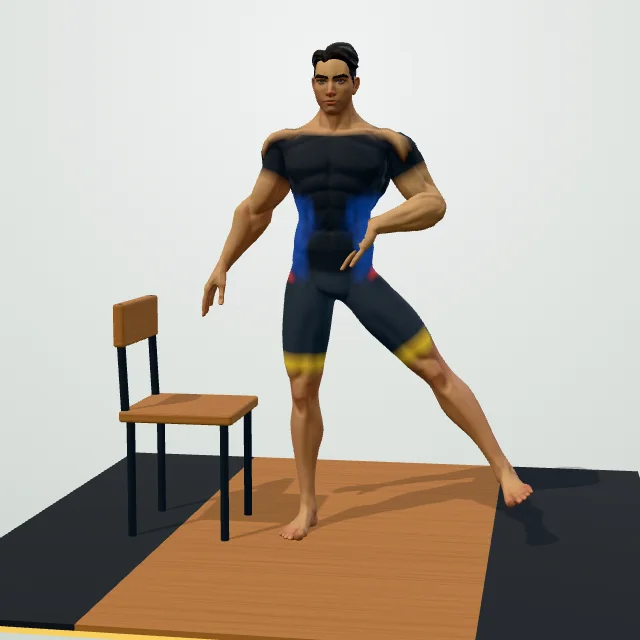
How to do it
- Stand tall next to a wall or behind a sturdy chair.
- Hold on lightly with one or both hands for balance.
- Keep your toes and hips facing forward.
- Lift your other leg straight out to the side, under control.
- Rise only as high as you can without tilting your torso.
- Lower back down slowly to the start.
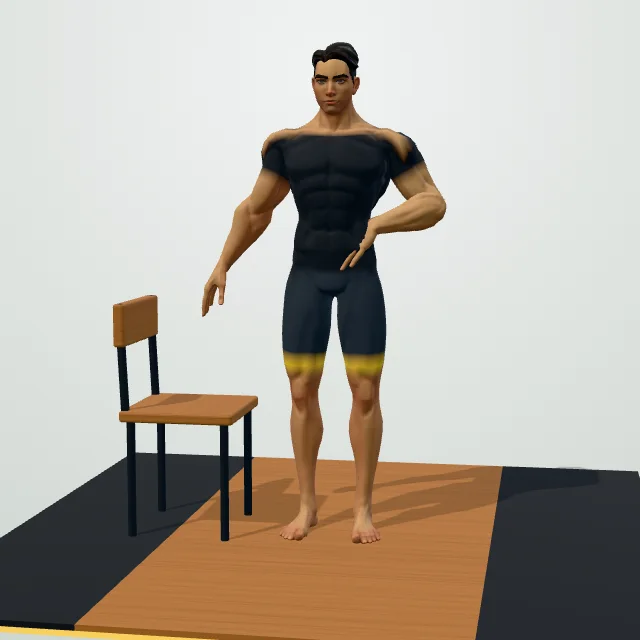
Coach cues
- Hold the chair, toes facing forward.
- Lift the leg straight out to the side.
- Keep your hips level, no leaning.
- Lower back down slowly.
Breathing: Breathe out as you lift the leg out to the side, breathe in as you lower it back down.
Common mistakes
Make it easier / Make it harder
Sets and reps by goal
| Goal | sets | reps | Rest |
|---|---|---|---|
| Strength | 4–5 | 6–8 | 90–120 s |
| Muscle growth | 3–4 | 10–15 | 60–90 s |
| Endurance | 2–3 | 15–25+ | 30–60 s |
The standing side leg raise, also known as standing hip abduction, lifts one straight leg out to the side while the other stays planted and your hands rest on a wall or chair for balance. It is a simple, low-impact way to strengthen the outer hip muscles that most everyday exercises barely touch.
What muscles does the standing side leg raise work?
The main muscle worked is the hip abductor group on the outside of the hip, particularly the glute medius, which lifts and controls your leg moving away from your body. Your glutes — covered in our glutes hub — on the standing side work hard to keep your hips level, and your obliques brace on both sides to stop your torso from swaying as you lift. These are the same muscles that stop your hips from dropping or wobbling when you walk, climb stairs, or stand on one leg to put on trousers or step off a curb.
Standing side leg raise benefits
- Better balance and stability. A stronger outer hip helps keep your pelvis level during walking and single-leg tasks, which supports fall prevention.
- No floor work required. Everything happens standing up, which suits anyone who finds getting up and down from the floor difficult.
- Targets an often-neglected muscle. Squats and lunges mostly work the front-to-back plane; this exercise is one of the few that directly trains sideways hip strength.
- Very low impact. There is no jumping or fast movement, making it a safe strengthening option for beginners, older adults, and anyone easing back into exercise.
How to do standing side leg raises
Stand tall next to a wall or behind a sturdy chair, holding on lightly with one or both hands for balance. Keep your standing leg slightly soft at the knee, your hips facing forward, and your toes pointing ahead rather than turned out. Lift your other leg straight out to the side, only as high as you can go without your hip or torso tilting to compensate, then lower it back down under control without letting your foot touch the floor between reps if you want a slightly harder version, or tapping down lightly if you are just starting out.
Keep the movement slow and controlled rather than swinging the leg — momentum from a fast kick trains balance far less than a slow, deliberate lift.
How to program standing side leg raises
| Level | Sets | Reps (each side) | Rest |
|---|---|---|---|
| Beginner / senior | 2 | 10-12 | 30-45 sec |
| Building strength | 2-3 | 12-15, with a light ankle band | 30-45 sec |
Two sets per side, a few times a week, is enough to build noticeable hip strength over several weeks — this is an accessory exercise, not one that needs heavy volume. It pairs well in a low-impact workout for seniors and beginners alongside marching in place or a sit-to-stand exercise.
Making it easier or harder
If balance is limited, hold on with both hands and use a smaller range of motion, or do the seated or lying version of a leg lift instead until standing balance improves. As it gets easier, use only one hand for light support, then progress to a resistance band looped around your ankles for standing hip abduction with added resistance. Related exercises like fire hydrant and clamshell train the same outer-hip muscles from the floor, which is a good next step once you are comfortable getting up and down.
Safety and who should take extra care
Keep a hand on a wall or sturdy chair for balance throughout, especially when starting out or on an uneven surface.
Stop if you feel sharp hip or groin pain, or if you feel unsteady on the standing leg — normal muscle effort in the outer hip is expected, joint pain and dizziness are not. Anyone recovering from a hip replacement, hip fracture, or with a history of falls should check with a doctor or physiotherapist before adding single-leg balance exercises to their routine.
Workout plans with this exercise
Questions people ask
What is a standing side leg raise?
What muscles do standing side leg raises work?
Do standing side leg raises work the glutes?
How do you do standing side leg raises correctly?
Are standing side leg raises good for seniors?
Why is hip abduction important?
Can you make standing side leg raises harder?
General fitness information, not medical advice. Check with a doctor or physiotherapist before starting if you have a health condition, an injury or are pregnant. Stop if you feel chest pain, dizziness or sharp pain.