Chest · Home, no equipment
Clap push-up: explosive power for the upper body
A plyometric push-up where you push off the floor hard enough to clap your hands before landing back in position. Here is how to build up to it safely and what it actually trains.
- Primary
- Chest
- Secondary
- TricepsFront delts
- Level
- Advanced
- Type
- Compound · Both sides together
- Sets × reps
- 3 × 5-8 reps
How to do it
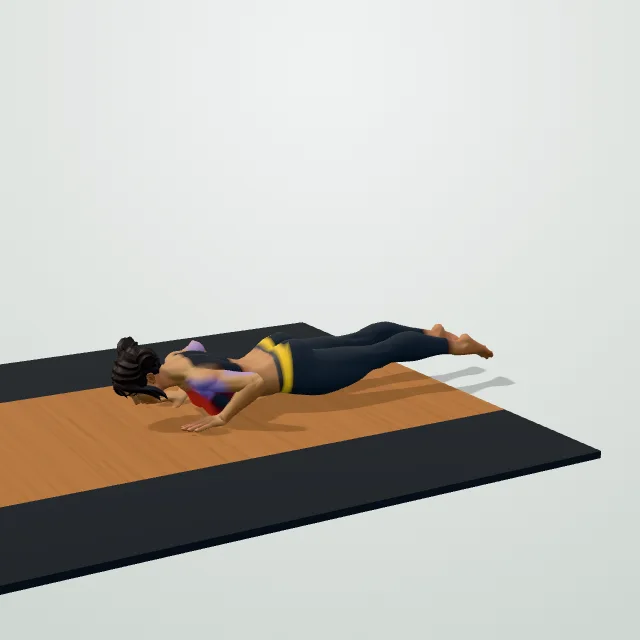
- Start in a standard push-up position, hands under your shoulders.
- Lower under control, keeping your body in a straight line.
- Drive through your palms as hard and fast as you can.
- Let your hands leave the floor and clap once in front of your chest.
- Return your hands to push-up width before you land.
- Land with slightly bent elbows and absorb the impact into the next rep.
Coach cues
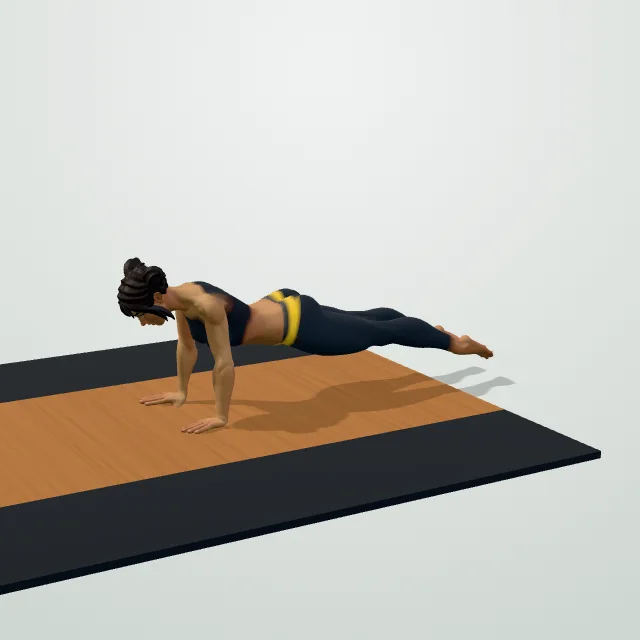
- Lower under control, body in one line.
- Push off the floor as hard as you can.
- Clap once, then reset your hand position.
- Land soft, elbows slightly bent, absorb the impact.
Breathing: Breathe out sharply as you push off the floor; breathe in as you reset for the next rep.
Common mistakes
Make it easier / Make it harder
Sets and reps by goal
| Goal | sets | reps | Rest |
|---|---|---|---|
| Strength | 4–5 | 3–6 | 2–4 min |
| Muscle growth | 3–4 | 6–12 | 90–150 s |
| Endurance | 2–3 | 15–25+ | 30–60 s |
The clap push-up is a plyometric push-up: instead of pressing up and stopping, you push off the floor explosively enough that your hands leave the ground and you clap once before landing back in the starting position. It is a common test of explosive upper-body power in sports and calisthenics, and one of the harder push-up variations to control safely, so technique matters more here than in most bodyweight exercises.
What muscles does the clap push-up work
Like any push-up, the chest, front delts and triceps drive the pressing motion, but the plyometric nature means they now have to fire fast rather than just strong. Your abs and glutes work hard to keep your body rigid through the airborne phase and, just as importantly, to absorb the landing without your hips or chest slamming down. This makes clap push-ups as much a power and landing-control exercise as a muscle-building one.
Benefits of clap push-ups
- Builds explosive upper-body power, which carries over to sports that involve pushing, throwing or striking — this is why the question "do clap push ups increase punching power" comes up so often, and the honest answer is that they can support it as one part of a broader power-training plan, not a substitute for skill practice.
- Trains the stretch-shortening cycle in the chest and shoulders, the same mechanism used in plyometric training for other muscle groups.
- Needs no equipment, making it a useful power exercise for home or outdoor training.
- Improves reactive strength, the ability to switch quickly from lowering to pushing, which slow bodyweight work does not train as directly.
Clap push-up vs regular push-up
A standard push-up is a strength and muscular-endurance exercise performed at a controlled tempo. The clap push-up uses the same muscles but asks them to produce force as fast as possible, which trains power rather than pure strength or endurance. Because the demand is different, clap push-ups should not simply replace your regular push-up sets — most programs use a small number of clap push-ups early in a session, when the nervous system is fresh, and save higher-rep standard or wide push-ups for later strength or endurance work.
How to do a clap push-up safely
Setup
Start in a standard push-up position, hands under or just outside your shoulders. Lower under control like a normal push-up, keeping your body in a straight line.
The explosive phase
Drive through your palms as hard and fast as you can so your hands leave the floor. Bring your hands together in front of your chest for a quick clap, then return them to the same width you pushed off from before you land.
The landing
Land with slightly bent elbows, not locked out, and immediately absorb the impact by letting the elbows bend into the next rep, similar to landing softly from a jump. A stiff, locked-elbow landing is the main way people hurt their wrists or elbows with this exercise.
Sets, reps and how often to train it
Because this is a power exercise, quality beats quantity: 3 sets of 5–8 reps is plenty, done early in a session while you are not fatigued, since tired reps lose height and landing control together. Rest 90 seconds to 2 minutes between sets so each set stays explosive, and limit true plyometric push-up work to 2 times a week with recovery days between sessions, since the joints take more impact than in slower push-up variations. It pairs well with a general strength push day built around the standard push-up or diamond push-up. See how many sets and reps for more on structuring a session.
Progressions before you attempt it
Do not attempt clap push-ups until you can perform 20+ strict standard push-ups with good form and control your landing on a normal push-up. Build up through explosive (but not airborne) push-ups first, pushing hard enough that your hands almost leave the floor, before progressing to a full clap. If a single clap is too hard to land safely, an incline clap push-up with hands on a bench reduces the impact while you build confidence. More advanced options such as a double clap or a chest-tap push-up should wait until the basic clap push-up feels controlled and repeatable.
Safety and who should avoid it
Clap push-ups load the wrists, elbows and shoulders with impact forces, so they are not appropriate for beginners, anyone with wrist, elbow or shoulder pain, or anyone without a solid base of strict push-up strength first. Stop immediately if you feel sharp pain on landing, and never train this move to failure — fatigue is exactly when landing control breaks down and injuries happen. If you have a history of joint injuries, are pregnant, or are new to exercise, choose a non-plyometric push-up variation instead and check with a doctor or physiotherapist before adding explosive training.
Questions people ask
What is a clap push-up?
What muscles do clap push-ups work?
Do clap push-ups increase punching power?
Are clap push-ups good for beginners?
How many clap push-ups should I do?
How do I land a clap push-up safely?
What is the difference between clap push-ups and regular push-ups?
General fitness information, not medical advice. Check with a doctor or physiotherapist before starting if you have a health condition, an injury or are pregnant. Stop if you feel chest pain, dizziness or sharp pain.