Shoulders · Gym
Landmine press: a shoulder-friendly angle to press heavy
Pressing a barbell anchored in a landmine sends it up and slightly forward instead of straight overhead, an angle that many lifters find easier on the shoulder joint.
- Primary
- Front deltsChest
- Level
- Beginner
- Type
- Compound · One side, then the other
- Sets × reps
- 3 × 8-10 reps per side
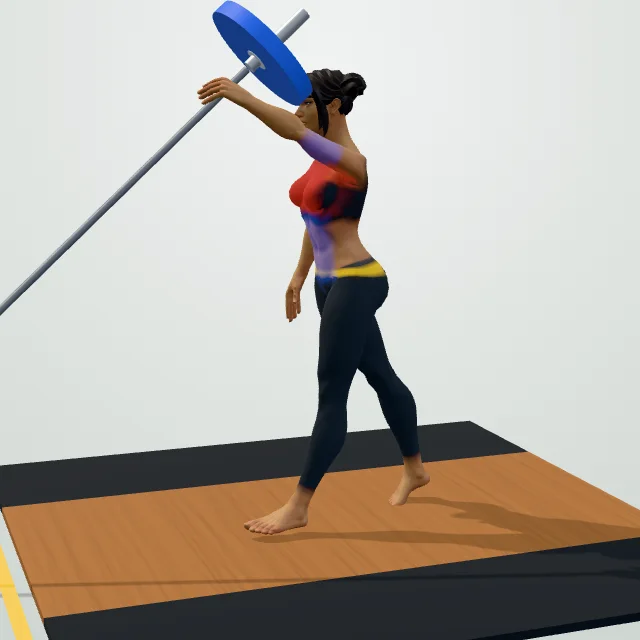
How to do it
- Anchor one end of a barbell in a landmine attachment.
- Take a half-kneeling or staggered stance.
- Hold the free end at shoulder height, elbow tucked slightly forward.
- Brace your core to resist rotation.
- Press the bar up and forward along its natural arc to full extension.
- Lower with control back to shoulder height and repeat.
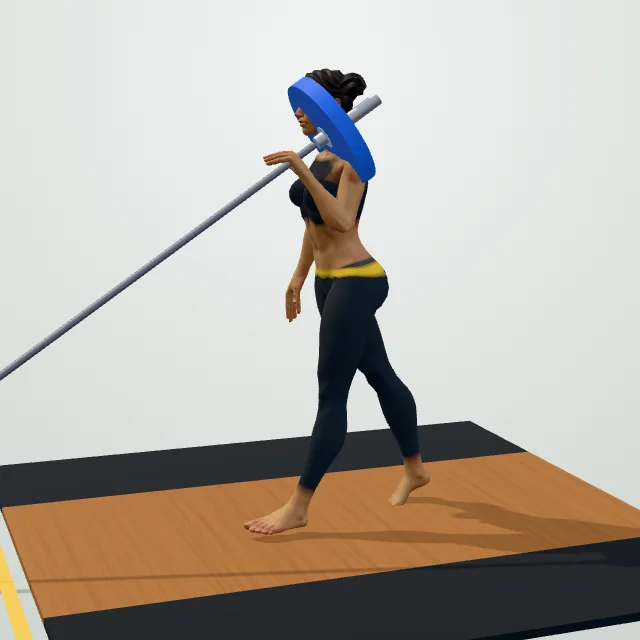
Coach cues
- Half-kneeling stance, core braced.
- Bar at shoulder height, elbow tucked.
- Press up and forward along the arc.
- Lower with control, resist rotating.
Breathing: Breathe in as you lower the bar to shoulder height, and breathe out as you press it up and forward.
Common mistakes
Make it easier / Make it harder
Sets and reps by goal
| Goal | sets | reps | Rest |
|---|---|---|---|
| Strength | 3–5 | 3–6 | 2–4 min |
| Muscle growth | 3–4 | 6–12 | 90–150 s |
| Endurance | 2–3 | 15–20 | 30–60 s |
The landmine press wedges one end of a barbell into a landmine attachment (or a corner) and has you press the free end up and slightly forward with one arm, usually from a half-kneeling or split stance. Because the bar travels on an arc rather than straight up, the angle at the shoulder is gentler than a strict overhead press for many lifters.
Muscles worked by the landmine press
The front delt and upper chest drive the press since the bar path angles forward as well as up, and the triceps finish the lockout. Because you press with one arm at a time, your core and obliques work hard to resist rotating toward the working side, and if you press from a half-kneeling stance, your hips and glutes on the down leg also brace to keep you stable.
Benefits
- Shoulder-friendly angle. The forward-and-up path avoids the very top of the overhead range some shoulders dislike.
- Anti-rotation core work. Pressing one arm at a time builds real core stability, not just shoulder strength.
- Minimal equipment. Just a barbell and a landmine attachment or a sturdy corner.
- Useful when overhead pressing is uncomfortable. A good regression while you rebuild shoulder tolerance for overhead work.
- Works well from many stances. Kneeling, half-kneeling or standing all train the movement, so it adapts to whatever space you have.
Technique and setup
Anchor one end of a barbell in a landmine attachment. Kneel in a half-kneeling stance (one knee down, opposite foot planted forward) or stand in a staggered stance, holding the free end of the bar at shoulder height with one hand, elbow tucked slightly in front of your ribs.
Brace your core, then press the bar up and slightly forward along its natural arc until your arm is fully extended. Lower with control back to shoulder height, resisting the urge to let your torso rotate toward the working arm as you press. Complete all reps on one side before switching, keeping your hips and shoulders square throughout.
Sets, reps and where it fits
| Goal | Sets × reps | Rest | Load |
|---|---|---|---|
| Strength | 3–4 × 6–8 per arm | 90 sec | RPE 7–8 |
| Muscle growth | 3 × 8–10 per arm | 60–90 sec | RPE 8–9 |
Use the landmine press as a shoulder-friendly alternative to the barbell overhead press, or alongside it for variety on a shoulder workout. Train your weaker arm first and match your stronger side to it rather than the reverse.
Landmine press vs overhead press vs dumbbell press
Against the barbell overhead press, the landmine version is easier on the shoulder joint since the bar never travels directly overhead, but it works one side at a time so total load and time under tension differ. Against the incline dumbbell press, both target a similar upper chest and front delt angle, though the landmine adds more single-arm core stability demand.
Warming up the single-arm press
Run a light set on each arm before loading up, paying attention to how your core resists rotation, since that anti-rotation bracing is often the limiting factor before your shoulder strength is. A short shoulder and hip mobility routine from our warm-up guide helps both sides move evenly, and logging each arm separately in my workouts makes it easy to spot when one side is lagging.
Safety notes
If overhead pressing has bothered your shoulder in the past, the landmine press is often a good place to rebuild pressing strength and confidence, since the angle avoids the top of the overhead range. Keep your core braced to prevent your torso from twisting toward the working arm, which can otherwise stress your lower back over time.
Because the movement stays lower and more forward than a strict overhead press, the landmine press lets many lifters with cranky shoulders keep pressing heavy without pain.
Questions people ask
What muscles does the landmine press work?
Is the landmine press easier on the shoulders than the overhead press?
How do you set up a landmine press?
Should I do the landmine press standing or kneeling?
Why does the landmine press train the core so much?
Can the landmine press replace the overhead press?
What equipment do I need for a landmine press?
General fitness information, not medical advice. Check with a doctor or physiotherapist before starting if you have a health condition, an injury or are pregnant. Stop if you feel chest pain, dizziness or sharp pain.