Mobility and stretching · Home, no equipment
Thread the needle stretch: unlocking rotation in a stiff upper back
Thread the needle rotates one arm under your body while the other reaches up, taking your thoracic spine through a range it rarely gets from sitting or lifting.
- Primary
- Upper back
- Secondary
- Rear deltsObliques
- Level
- Beginner
- Type
- Isolation · One side, then the other
- Sets × reps
- 1 × 8 reps per side
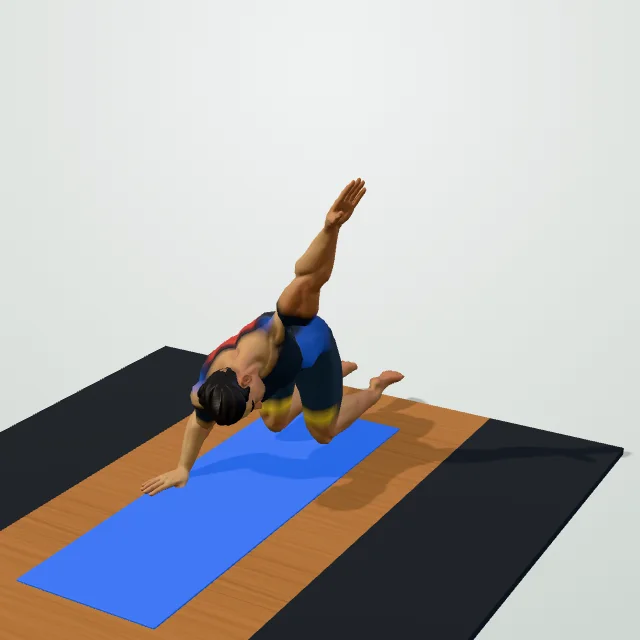
How to do it
- Start on hands and knees, hands under shoulders, knees under hips.
- Lift one hand and slide that arm under your body and through the gap.
- Let your shoulder and the side of your head rest lightly on the floor.
- Reverse the movement, reaching the same arm up toward the ceiling.
- Follow your hand with your eyes as your chest opens to that side.
- Return to the start position and repeat on the same side for the set.
- Switch sides once you have completed the reps on the first side.
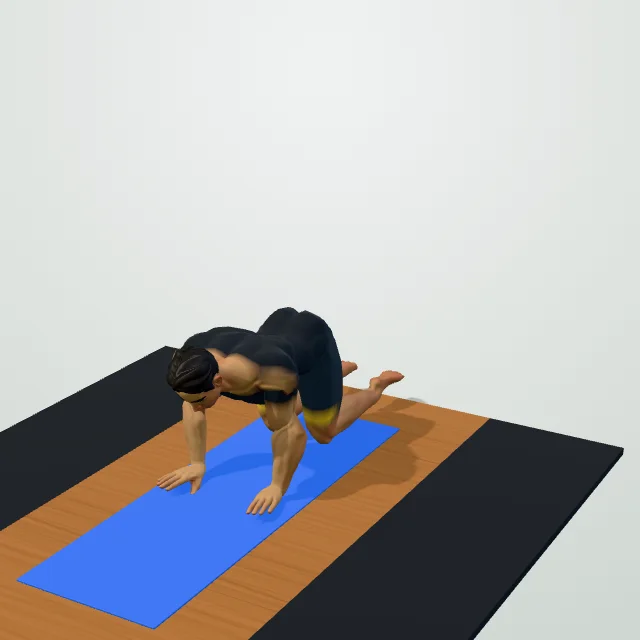
Coach cues
- Slide the arm through slowly.
- Keep your hips square to the floor.
- Follow your hand with your eyes as you open up.
- Breathe out as you rotate open.
Breathing: Breathe in as you slide the arm through, and breathe out as you rotate open.
Common mistakes
Make it easier / Make it harder
The thread the needle stretch takes your upper back through rotation by sliding one arm underneath your body while the other reaches toward the ceiling. It targets a movement — thoracic rotation — that most daily activity and even most workouts barely touch, which is why so many people find their upper back feels locked until they try it.
Muscles worked and why thoracic rotation matters
This stretch mobilizes the joints between your ribs and thoracic vertebrae — the segment of your upper back designed to rotate — along with the rear shoulder muscles and obliques that control the movement on either side. Most of the spine's rotation should come from this thoracic section rather than the lower back, so a stretch that specifically targets it helps keep rotation coming from the right place during lifts, swings, and throws.
Benefits
Better thoracic rotation can make it easier to reach overhead, rotate for a row or a golf swing, and turn to check a blind spot without twisting through your lower back to compensate. People who sit for long hours often lose rotation here first, so this stretch is a common fix for the specific stiffness that comes from a desk-bound day rather than general tightness everywhere.
Technique: sliding the arm through
Start on hands and knees, then lift one hand off the floor and slide that arm underneath your body, through the gap between your other arm and leg, until your shoulder and the side of your head rest lightly on the floor. From there, reverse the movement: unwind by reaching the same arm up toward the ceiling, following your hand with your eyes, and let your chest open toward that side. Keep your hips roughly square to the floor throughout — the rotation should come from your upper back and ribs, not from your hips shifting side to side.
Dynamic vs. static: how to use this stretch
Thread the needle is typically done as a dynamic, rhythmic movement — sliding through and unwinding for a set number of reps — which makes it a good fit for a warm-up before rotational work like rows, throws, or swings. You can also hold the unwound, open position for a few seconds on the last rep or two if you want more of a static stretch feel, but the moving version is what most people use to build usable rotation rather than just a passive stretch.
How to program it
Around 8 slow reps per side, either as part of a warm-up before upper-body or rotational training, or as a short mobility break during a desk-heavy day. It combines well with cat-cow and the world's greatest stretch for a broader spine and hip mobility routine, and is gentle enough to do daily if your upper back tends to stiffen up quickly.
Variations: standing and foam roller options
A standing version — rotating your arms and chest from a hip-width stance — works when getting to the floor is not practical, though it gives a smaller range than the full quadruped version. Doing the stretch with your hips supported on a foam roller can add a bit more range for people who already have good baseline mobility, while beginners may prefer to keep the reach smaller and simply focus on feeling the rotation come from the upper back rather than chasing full range immediately.
Safety notes
Move into the rotation smoothly rather than snapping into it, and stop short of any sharp or pinching pain in the shoulder or neck. If you have a diagnosed disc issue, recent shoulder surgery, or persistent neck pain, check with a physiotherapist before adding this movement, since the range and the weight briefly resting through the shoulder may need adjusting for you. General stiffness that eases as you warm up is expected; pain that gets worse with each rep is not.
More exercises for mobility and stretching
Questions people ask
What is the thread the needle stretch?
What muscles does thread the needle work?
What is thoracic rotation and why does it matter?
Is thread the needle a dynamic or static stretch?
How many reps of thread the needle should I do?
Can thread the needle help desk-related back stiffness?
What is a good alternative to thread the needle?
General fitness information, not medical advice. Check with a doctor or physiotherapist before starting if you have a health condition, an injury or are pregnant. Stop if you feel chest pain, dizziness or sharp pain.