Mobility and stretching · Home, no equipment
Cat-cow stretch: moving your spine one segment at a time
Cat-cow rocks your spine slowly between an arch and a round, on hands and knees, tied to your breath. It is one of the simplest ways to loosen a stiff lower and upper back.
- Primary
- Lower backUpper back
- Secondary
- Abs
- Level
- Beginner
- Type
- Isolation · Both sides together
- Sets × reps
- 1 × 10 reps
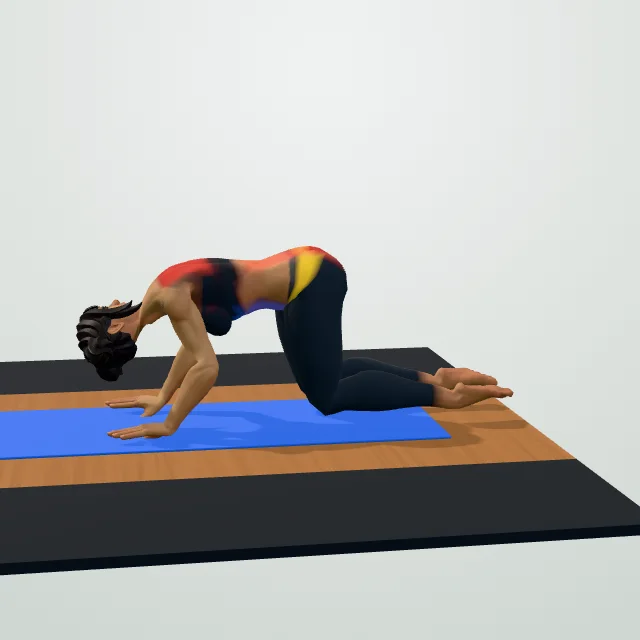
How to do it
- Start on hands and knees, hands under shoulders, knees under hips.
- Breathe in, drop your belly, lift your chest and tailbone (cow).
- Breathe out, round your spine up, tuck chin and tailbone (cat).
- Move slowly, letting each part of your spine take part in the motion.
- Keep your arms and thighs steady as your spine does the moving.
- Repeat for the set, staying matched to your breath throughout.
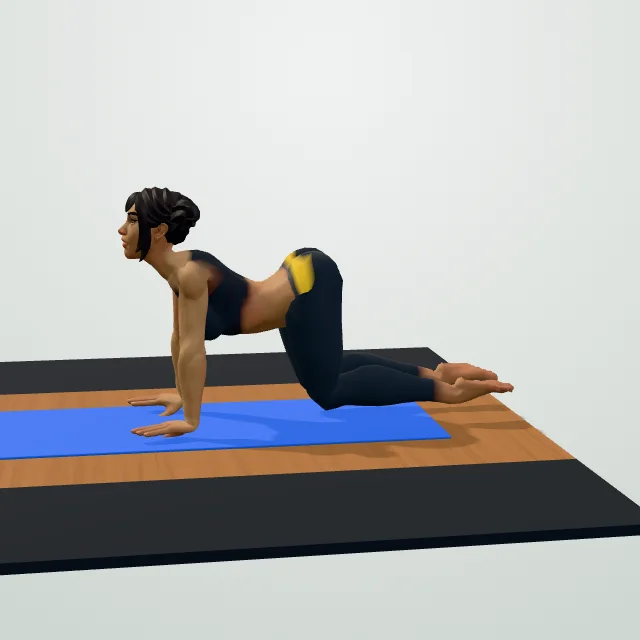
Coach cues
- Breathe in, belly down, chest lifts.
- Breathe out, round up, chin tucks.
- Move slow, one part of your spine at a time.
- Keep arms and hips still and steady.
Breathing: Breathe in as you arch into cow, and breathe out as you round into cat.
Common mistakes
Make it easier / Make it harder
The cat-cow stretch moves your spine slowly between two positions — rounding it up like a cat, then dropping it into an arch like a cow — while you breathe with each move. It is one of the most commonly recommended exercises for a stiff back because it takes the whole spine through gentle flexion and extension without any load.
Muscles worked and why the movement helps
Cat-cow mainly mobilizes the joints and muscles of the lower and upper back, taking each segment of the spine through a small range of rounding and arching in turn, rather than moving the whole back as one stiff block. The abs draw in gently as you round your spine on the cat portion, giving them a light, controlled contraction. Because it is slow and driven by breath, it also helps you notice where your spine moves easily and where it feels stuck.
Benefits
Regularly moving the spine through this range can help ease general stiffness and tightness from long periods of sitting, and many people use it as a first move after getting out of bed or as a break during a desk-bound day. It is also a common warm-up before other back or core work, since it primes the spine's own movement before you load it. Because it needs no equipment and is easy on the joints, it is a good fit for almost any fitness level.
Technique: linking the movement to your breath
Start on your hands and knees, hands under your shoulders and knees under your hips. As you breathe in, drop your belly toward the floor, lift your chest and tailbone, and let your gaze come up slightly — this is the "cow" position. As you breathe out, round your spine up toward the ceiling, tuck your chin and tailbone under, and draw your belly in — this is the "cat" position. Move slowly enough that you can feel each segment of your spine take part, rather than snapping between the two end ranges.
Dynamic vs. static: where cat-cow fits
Cat-cow is a dynamic stretch — you move continuously through a range for reps, matched to your breathing, rather than holding one position still. That makes it useful both as a warm-up before training and as a gentle mobility break any time your back feels stiff, unlike a held static stretch, which is better placed after a workout once your muscles are already warm. There is no fixed hold time here; instead, aim for slow, complete reps.
How to use it
Ten slow reps, moving with your breath, is a common target — you can do a set before a workout as part of a warm-up routine, after training as part of a cool-down, or on its own on a rest day. It also pairs naturally with child's pose and thread the needle in a short back-mobility routine, and works well first thing in the morning if your back feels stiff on waking.
Variations: seated and modified versions
A seated cat-cow, done on a chair with hands on your knees, gives almost the same spinal movement for anyone who finds the floor position uncomfortable or hard to get into and out of. If your wrists are sensitive, come onto your forearms instead of flat hands, or keep the range smaller until it feels comfortable. During pregnancy, many people continue cat-cow through most trimesters as a comfortable way to relieve back tension, though it is worth checking with your doctor or midwife first, especially later on.
Safety notes
Move within a comfortable range rather than forcing the arch or the round further than feels easy — cat-cow should feel like relief, not strain. If you have osteoporosis, a recent spinal injury, or disc-related back pain that is currently flaring up, check with a doctor or physiotherapist before adding it, since your therapist may want to adjust the range for you specifically. Stop if you feel any sharp or shooting pain down a leg or arm rather than a general stretch through your back.
Workout plans with this exercise
More exercises for mobility and stretching
Questions people ask
What is the cat-cow stretch?
What muscles does cat-cow work?
How do you breathe during cat-cow?
Is cat-cow good for lower back pain?
Is cat-cow safe during pregnancy?
How many reps of cat-cow should I do?
Is cat-cow a dynamic or static stretch?
General fitness information, not medical advice. Check with a doctor or physiotherapist before starting if you have a health condition, an injury or are pregnant. Stop if you feel chest pain, dizziness or sharp pain.