Mobility and stretching · Home, no equipment
Overhead triceps stretch: reach down your back, not out to the side
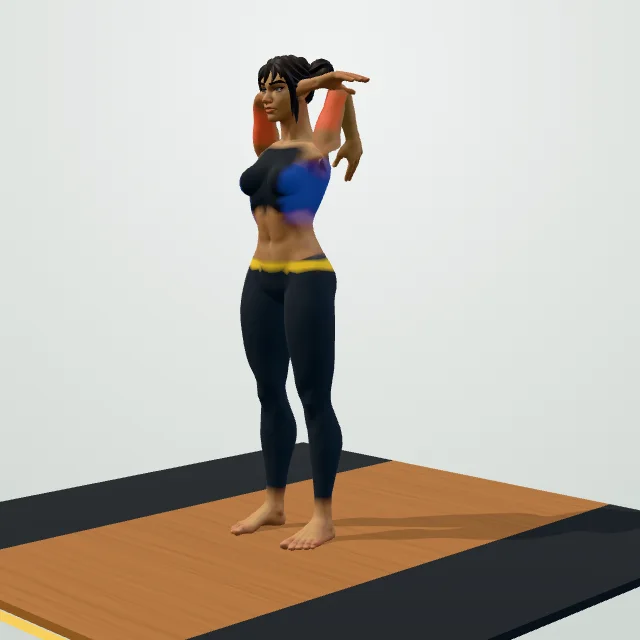
Raising one arm overhead and bending the elbow behind your head is the simplest way to stretch a tight triceps, using your other hand to guide a gentle pull rather than a hard yank.
How to do it
- Raise one arm straight overhead.
- Bend the elbow so your hand drops behind your head.
- Reach your other hand up to hold the raised elbow.
- Gently guide the elbow back and slightly across your body.
- Stop once you feel a stretch along the back of your upper arm.
- Hold, breathing steadily, then release.
- Switch arms and repeat.
Coach cues
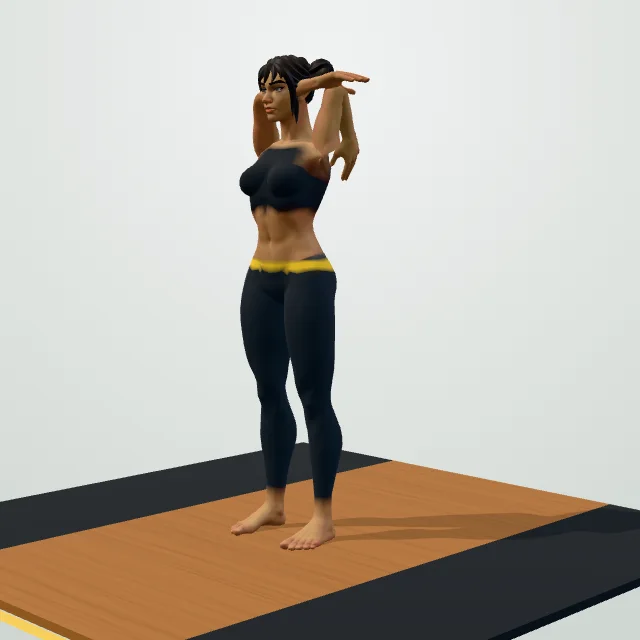
- Elbow points up and back, not out to the side.
- Guide gently, do not pull hard.
- Feel it in the back of your arm, not your shoulder.
- Breathe steady, no bouncing.
Breathing: Breathe steadily throughout the hold; do not hold your breath or yank the elbow.
Common mistakes
Make it easier / Make it harder
The overhead triceps stretch lengthens the muscle along the back of your upper arm by lifting the elbow high and bending it so your hand drops behind your head. It is a short, familiar stretch — the kind most people already do without thinking — but doing it with the right hip and elbow position makes a real difference to how much of the triceps actually gets a stretch.
Muscles worked and why the triceps gets tight
This stretch targets the triceps, the three-headed muscle running down the back of your upper arm from the shoulder blade and upper arm bone to the elbow, with the lats along your side sharing some of the stretch as your arm reaches fully overhead. The triceps tightens up after any pressing or pushing work — bench press, overhead press, push-ups, dips — because those exercises shorten it repeatedly through a partial range without ever taking it through a long stretch.
Benefits
Stretching the triceps after training can ease that tight, achy feeling along the back of the arm after a chest or shoulder session, and it can make it easier to reach a hand fully overhead or behind your head for everyday tasks. It will not speed up recovery on its own or prevent soreness entirely, but as a regular habit after pushing exercises like the overhead press or skull crusher, it keeps the arm feeling looser.
Technique: lift the elbow high, then let the hand drop
Raise one arm straight overhead, then bend the elbow so your hand falls behind your head toward your opposite shoulder blade. Use your other hand to hold the raised elbow, and gently guide it back and slightly across your body rather than pulling straight down — the goal is to keep the elbow pointing up and back, not out to the side. You should feel the stretch along the back of your upper arm, not in your shoulder joint itself; if it is pinching at the front of the shoulder, lower the elbow a little and reset the position.
Dynamic vs. static: when to stretch your triceps
The overhead hold is a static stretch — you move into position once and hold still — which fits best after a workout when the muscle is already warm, or as part of a stand-alone stretching routine. Hold for 20–60 seconds per arm, breathing steadily rather than pulling harder on each exhale. Before training, swap it for a dynamic option such as arm circles, which raise blood flow to the shoulder and triceps without the brief strength dip that a long static hold can cause right before pressing heavy.
How to program it
Hold each side for 20–60 seconds and repeat once or twice if the arm still feels tight, ideally right after a push-focused workout or as part of a post-workout stretching routine. It pairs naturally with a doorway chest stretch and a cross-body shoulder stretch for a simple upper-body cool-down after any pressing session, and it costs nothing to add since it needs no equipment.
Variations: with a towel, seated or against a wall
If you cannot yet reach your hand behind your head comfortably, loop a towel over the raised hand and hold the other end with your lower hand behind your back, walking your hands closer together over time. A seated version works just as well if standing balance is a concern, and pressing the raised elbow lightly against a wall can help you feel where the stretch should sit before trying it unsupported.
Safety notes
Ease the elbow back gently and stop at a comfortable pull rather than forcing the hand further down your back — the shoulder is a mobile joint, and forcing an overhead reach can strain it rather than simply lengthen the triceps. Anyone recovering from a shoulder injury, rotator cuff issue, or recent shoulder surgery should check with a doctor or physiotherapist before stretching overhead, since this position loads the shoulder in a way that can aggravate an existing problem. Stop if you feel sharp pain, pinching, or numbness rather than a general stretch, and warm up the shoulder first with a few minutes of light movement — see our guide to warming up for ideas.
Workout plans with this exercise
More exercises for mobility and stretching
Questions people ask
How long should you hold a triceps stretch?
What muscles does the overhead triceps stretch work?
Should I stretch my triceps before or after a workout?
Why do my triceps feel tight after training?
Is the overhead triceps stretch safe with a shoulder injury?
What is a good alternative to the overhead triceps stretch?
What should I feel during a triceps stretch?
General fitness information, not medical advice. Check with a doctor or physiotherapist before starting if you have a health condition, an injury or are pregnant. Stop if you feel chest pain, dizziness or sharp pain.