Mobility and stretching · Home, no equipment
Standing quad stretch: easing tight thighs after leg day
Pulling one heel toward your glutes while standing stretches the front of your thigh, and a small balance trick makes it far easier to hold steady.
- Primary
- Quads
- Secondary
- Hip flexors
- Level
- Beginner
- Type
- Isolation · One side, then the other
- Sets × reps
- 1 × 30 s hold per side
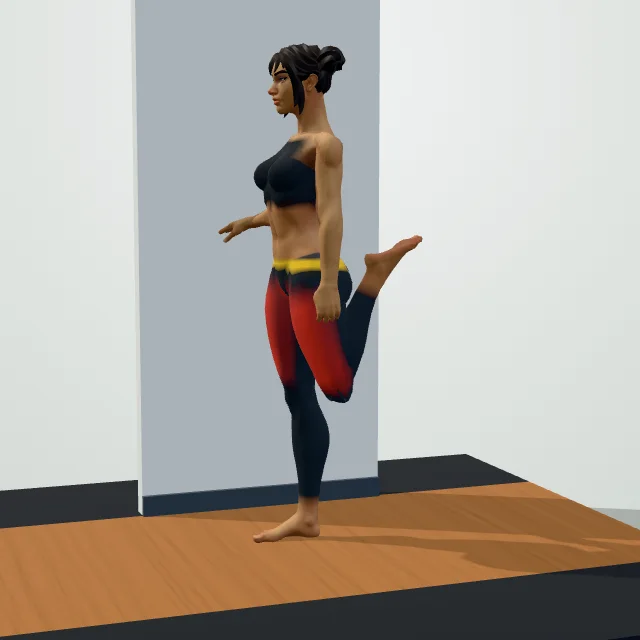
How to do it
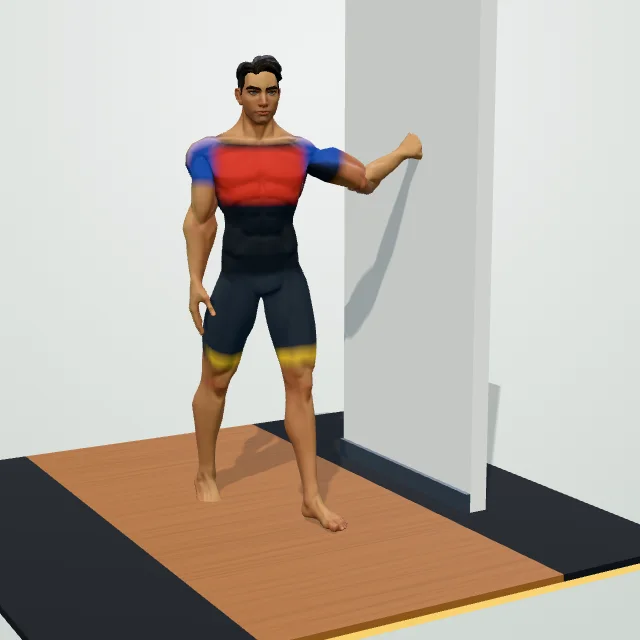
- Stand on one leg, holding a wall or chair for balance.
- Bend your other knee, bringing your heel up behind you.
- Grab your ankle or foot with your hand.
- Gently pull your heel toward your glutes, knees close together.
- Keep your hips level and pushed slightly forward.
- Hold, breathing steadily, then release.
- Switch legs and repeat.
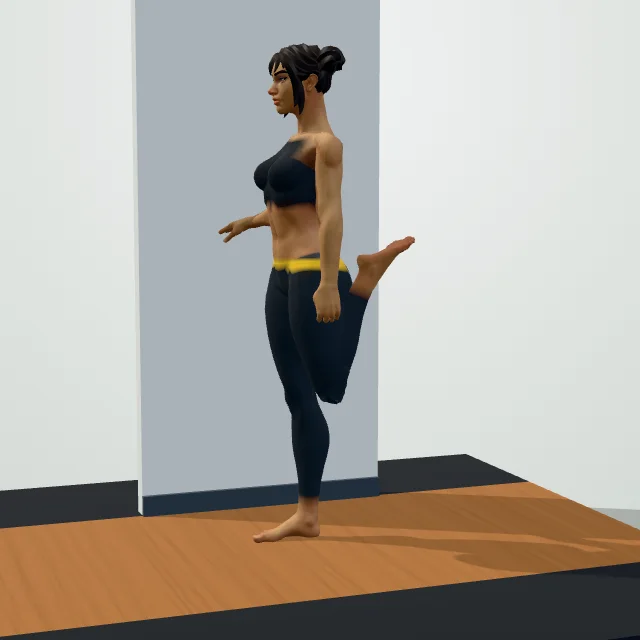
Coach cues
- Hold something steady for balance.
- Keep your knees close together.
- Push your hips slightly forward.
- Pull gently, breathe steady.
Breathing: Breathe steadily throughout the hold; do not hold your breath.
Common mistakes
Make it easier / Make it harder
The standing quad stretch pulls your heel back toward your glutes to lengthen the muscles running down the front of your thigh. It is the go-to move for the tight, heavy feeling many people notice at the front of the leg after a run, a hike, or a heavy set of squats.
Muscles worked and why quads tighten up
This stretch targets the quadriceps, the group of four muscles along the front of your thigh, with the hip flexors sharing part of the stretch since one of the quad muscles, the rectus femoris, also crosses the front of the hip. Quads work hard in almost every lower-body movement — squatting, running, climbing stairs, cycling — and rarely get taken through a long stretch during those activities, which is why they build up tightness that a short hold can noticeably ease.
Benefits
A regular quad stretch can help reduce the tight, "heavy leg" feeling after running or leg-day training, and it can make it easier to move into a deeper squat or lunge without the front of the thigh limiting the range first. Runners in particular use it to manage the repetitive loading quads take with every stride, and it pairs well with a hamstring stretch to address the whole thigh rather than just one side of it.
Technique: using a wall or chair for balance
Stand on one leg, holding a wall or the back of a chair for balance, and bend your other knee to bring your heel up behind you. Grab your ankle or foot with your hand and gently pull it toward your glutes, keeping your knees close together and your standing leg with a soft bend rather than locked straight. Keep your hips level and pushed slightly forward rather than letting your lower back arch to compensate — that small adjustment shifts the stretch back into the quad instead of the lower back.
Dynamic vs. static: when to stretch your quads
This standing hold is a static stretch, best placed after a run or workout, or during a general stretching session, rather than immediately before heavy squats or sprinting. Hold for 20–60 seconds per side, keeping your breathing steady. Before training, a dynamic warm-up move like a walking lunge or a few leg swings is a better way to prepare the quads without the temporary strength dip a long static hold can cause right before a heavy set.
How to program it
Hold each side for 20–60 seconds, and repeat 2–3 times per leg if it still feels tight, ideally as part of your post-workout stretch routine after running or lower-body training. It pairs naturally with the kneeling hip flexor stretch and a hamstring stretch to cover the whole thigh in one short sequence.
Variations: seated, side-lying and with a strap
If balancing on one leg is difficult, a side-lying version on the floor removes the balance demand entirely — lie on one side, bend the top knee, and pull the foot toward your glutes with your hand. A strap looped around your ankle can help if you cannot comfortably reach your foot by hand, which is common for beginners or anyone with limited knee flexion. Both variations give the same stretch to the front of the thigh with less coordination required.
Safety notes
Pull gently rather than yanking your heel toward your glutes — the knee joint does not respond well to sudden force, and a smooth, steady pull is both safer and more effective. If you have knee pain, a recent knee injury, or a diagnosed patellar tendon issue, check with a doctor or physiotherapist before adding a deep quad stretch, since bending the knee fully can aggravate certain conditions. Stop if you feel sharp pain at the front of the knee rather than a stretch through the muscle belly.
Workout plans with this exercise
More exercises for mobility and stretching
Questions people ask
How long should you hold a quad stretch?
What muscles does the standing quad stretch work?
Should I do a quad stretch before or after running?
How do I balance during the standing quad stretch?
Is the standing quad stretch bad for the knees?
What is a good alternative to the standing quad stretch?
Why do my quads feel tight after leg day or running?
General fitness information, not medical advice. Check with a doctor or physiotherapist before starting if you have a health condition, an injury or are pregnant. Stop if you feel chest pain, dizziness or sharp pain.