Mobility and stretching · Home, no equipment
World's greatest stretch: the one move that warms up everything
One flowing lunge with a rotation touches almost every tight area from a day of sitting: hips, hamstrings, and the upper back. It earns its name as a warm-up, not a cool-down.
- Primary
- Hip flexorsHamstrings
- Secondary
- Upper backGlutesInner thighs
- Level
- Beginner
- Type
- Compound · Alternate sides
- Sets × reps
- 1 × 5 reps per side
How to do it
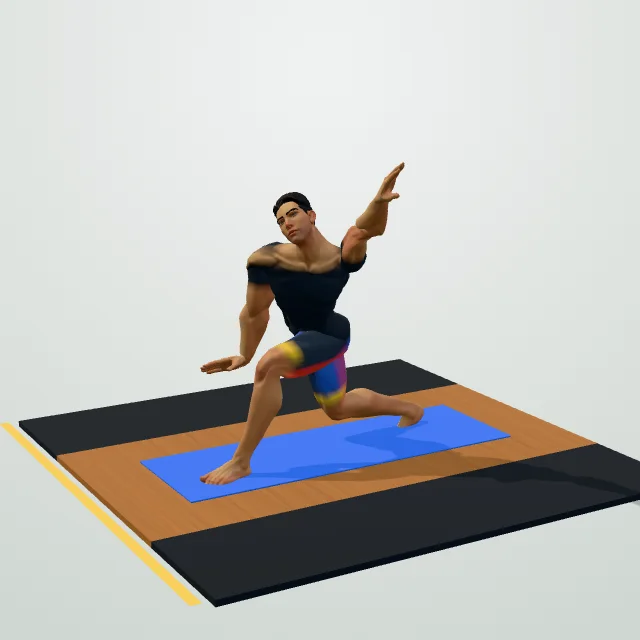
- Stand tall, then step one foot into a long, deep lunge.
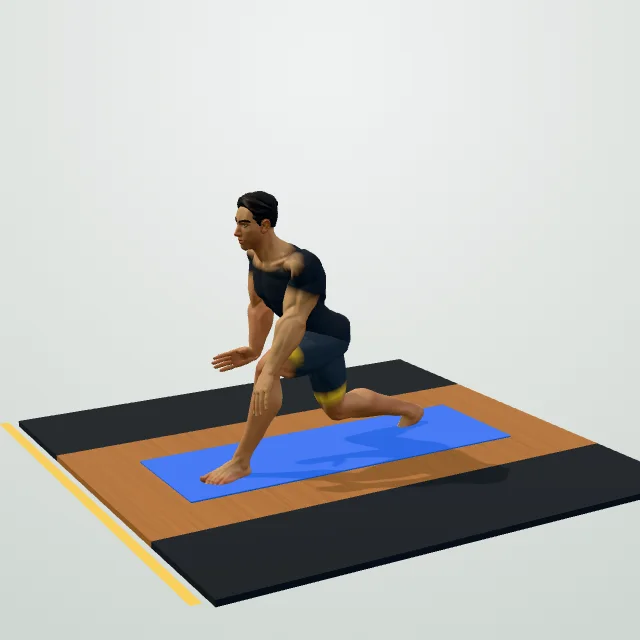
- Place both hands on the floor inside your front foot.
- Drop the back-side hand flat on the floor for support.
- Reach your other arm straight up, rotating your chest toward it.
- Hold the rotation for one breath, following your hand with your eyes.
- Bring the hand back down, then step forward into the next side.
- Repeat, alternating sides, for the set.
Coach cues
- Sink your hips down, not forward.
- Reach tall and rotate from your chest.
- Breathe out as you rotate open.
- Move slow and controlled, not bouncy.
Breathing: Breathe in as you settle into the lunge, and breathe out as you rotate your chest open.
Common mistakes
Make it easier / Make it harder
The world's greatest stretch is a single flowing movement — a deep lunge, a rotation, and a reach — that mobilizes more of your body in one rep than almost any other warm-up drill. It earned its name from strength coaches who needed one move to loosen tight hips, hamstrings, and a stiff upper back before a lifting or running session.
Muscles worked and why the flow matters
Stepping into a deep lunge lengthens the hip flexors and hamstrings of both legs at once: the front hip opens as it drives forward, while the back leg's hip flexor and quad stretch under the lunge position. Dropping your back hand to the floor and rotating the other arm toward the ceiling takes your upper back and thoracic spine through rotation, with your glutes and inner-thigh (adductor) muscles working to hold the position steady. Few single exercises load this many joints through a full range in one rep.
Benefits
Used as a warm-up, it raises hip and spine mobility right before the ranges you are about to load in a squat, deadlift, or run, which can help you move better once the working sets start. It is also a useful screen: if one side feels noticeably tighter, that is worth paying attention to before you load it. Because it needs no equipment, it works equally well in a gym, a hotel room, or on a track infield.
Technique: getting the sequence in the right order
Start standing, then step one foot forward into a long lunge — long enough that your back knee can lower toward the floor without your front knee sliding past your toes. Place both hands inside your front foot, then drop the back hand to the floor for support while you reach the other arm straight up, rotating your chest to follow your fingertips. Keep your front shin close to vertical and your hips sinking down rather than forward, so the stretch loads your hips instead of your lower back. Pause for a breath at the top of the rotation, then bring the hand back down and drive through the front foot to step forward into the next rep on the other side.
Dynamic vs. static: why this one goes before training
This is a dynamic stretch — you move through the range for reps rather than holding still — which raises your heart rate slightly and rehearses the ranges you are about to use, making it a good fit at the start of a session. Save still, held stretches (20–60 seconds each) for after training or on rest days, when muscles are already warm and you are not about to load them heavily. Holding a deep static stretch cold, right before heavy lifting, can temporarily reduce power output, so keep pre-workout mobility moving like this one.
How to use it in a warm-up
Five slow reps per side is plenty before a lower-body or full-body session — see our guide to warming up for where it fits alongside light cardio and a few ramp-up sets. It pairs well with leg swings and hip circles in a 5–10 minute routine, such as the 6-minute dynamic warm-up. There is no need to rush the rotation — a controlled pace through the full range does more than a fast, shallow one.
Modifications for beginners and tight hips
If a full lunge with the back knee near the floor feels like too much, shorten the step and keep the back knee slightly off the ground instead of reaching it down fully. You can also drop the overhead reach at first and simply hold the rotation with your hand on your lower back, adding the reach once the lunge itself feels stable. For a gentler entry point into the same hip-opening pattern, the kneeling hip flexor stretch isolates just the front-hip piece without the balance demand of the full flow.
Safety notes
Move into each range under control rather than bouncing into the deepest position you can find — a sharp pinch in the hip or groin is a sign to shorten the range, not push through it. Anyone recovering from a hip, knee, or lower-back injury, or in the later stages of pregnancy, should get this movement checked by a physiotherapist before adding it to a warm-up, since the balance and rotation demands are higher than a simple static stretch. Stop and hold onto something if you feel dizzy or unsteady in the lunge position.
More exercises for mobility and stretching
Questions people ask
What is the world's greatest stretch?
What muscles does the world's greatest stretch work?
Is the world's greatest stretch dynamic or static?
How many reps of the world's greatest stretch should I do?
Why is it called the world's greatest stretch?
Can beginners do the world's greatest stretch?
Should I do this before or after a workout?
General fitness information, not medical advice. Check with a doctor or physiotherapist before starting if you have a health condition, an injury or are pregnant. Stop if you feel chest pain, dizziness or sharp pain.