Mobility and stretching · Home, no equipment
Standing hamstring stretch: reach for your toes, not your back
A straight-leg hinge from standing is the simplest way to stretch tight hamstrings, as long as the reach comes from your hips and not from rounding your spine.
- Primary
- Hamstrings
- Secondary
- CalvesLower back
- Level
- Beginner
- Type
- Isolation · One side, then the other
- Sets × reps
- 1 × 30 s hold per side
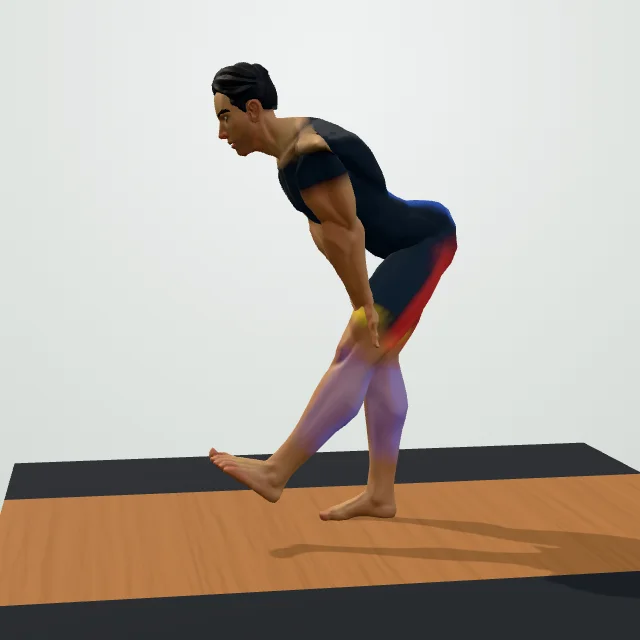
How to do it
- Stand with one foot slightly forward, or heel up on a low step.
- Keep both legs close to straight, with a soft bend in the knees.
- Hinge forward from your hips, keeping your back reasonably flat.
- Reach your hands toward your shin or foot.
- Stop once you feel a stretch along the back of your thigh.
- Hold, breathing steadily, then rise back up.
- Switch sides and repeat.
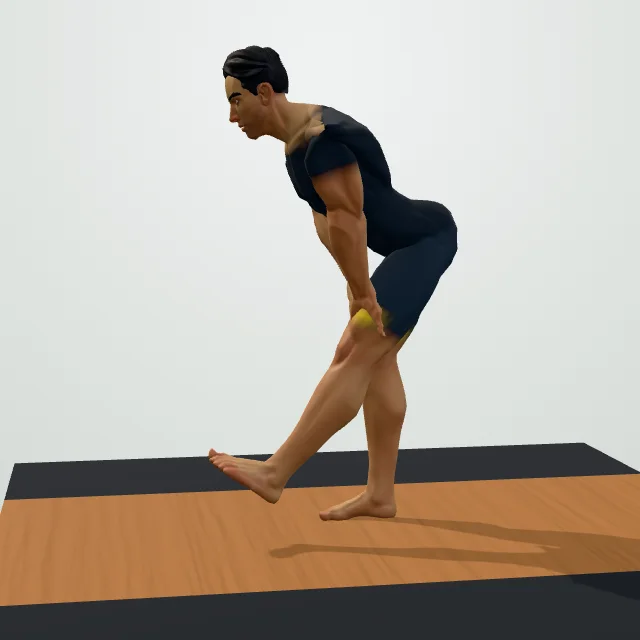
Coach cues
- Hinge from your hips, not your spine.
- Keep a soft bend in your knees.
- Reach toward your shin, not your toes.
- Breathe steady, no bouncing.
Breathing: Breathe steadily throughout the hold; do not hold your breath or bounce.
Common mistakes
Make it easier / Make it harder
The standing hamstring stretch hinges your hips forward with straight legs to lengthen the muscles along the back of your thigh. It is one of the most searched-for stretches because tight hamstrings are so common, especially for anyone who sits most of the day or trains legs without ever stretching them afterward.
Muscles worked and why hamstrings get so tight
This stretch lengthens the hamstrings, the group of muscles running down the back of your thigh from your sit bones to below your knee, with the calves and lower back sharing some of the stretch depending on how far you reach. Hamstrings often feel tight simply because they rarely get taken through their full length during daily life or even during most workouts, which train them through a partial range rather than a long stretch.
Benefits
Regularly stretching the hamstrings can make it easier to bend forward, pick things up off the floor, and move through a fuller range in exercises like the Romanian deadlift or a deep squat. Some people also find it eases a pulling sensation along the back of the leg after running or after a leg workout. It will not "fix" chronic tightness on its own, but it is a simple, low-cost habit that adds up when done consistently.
Technique: hinge from the hips, not the spine
Stand with one foot slightly in front of the other, or place your heel up on a low step, and keep both legs close to straight, with a soft bend in the knees rather than locking them out. Hinge forward from your hips, keeping your back reasonably flat, and reach your hands toward your shin or foot until you feel a stretch along the back of your thigh. The goal is to feel this in your hamstrings, not in a rounded lower back — if you notice the stretch mostly in your spine, hinge less deeply and focus on tilting from the hips instead.
Dynamic vs. static: when to stretch hamstrings
This standing version is a static stretch — a still hold rather than a moving stretch — which research generally places after training or on its own, once your muscles are already warm. Hold for 20–60 seconds, breathing steadily rather than bouncing or holding your breath. Before a workout, a dynamic option such as leg swings or a few reps of the world's greatest stretch warms the hamstrings up without the brief strength dip that a long static hold can cause right before heavy lifting.
How to program it
Hold each side for 20–60 seconds, and repeat 2–3 times if the hamstring is particularly tight, ideally as part of a post-workout stretching routine. Doing it most days, rather than only occasionally, tends to produce a steadier improvement in how far you can comfortably reach. It combines naturally with a standing quad stretch and a calf stretch for a simple lower-body stretching sequence.
Variations: seated, supine and with a strap
A seated version, with one leg extended and the other bent, gives more stability if balance is a concern, and using a strap or towel around the foot while lying on your back lets you control the stretch with your arms rather than your balance. Both are useful starting points for beginners or anyone stretching after a knee or ankle injury who wants to avoid standing on one leg while stretching.
Safety notes
Ease into the stretch and stop at a firm but comfortable pull rather than bouncing or forcing the reach — bouncing can trigger a protective muscle reaction that makes the hamstring feel tighter, not looser. Anyone with sciatica or nerve-related leg pain should be cautious with a deep forward hinge and check with a doctor or physiotherapist first, since this stretch can sometimes aggravate nerve symptoms rather than help them. Stop if you feel tingling, numbness, or sharp pain rather than a general stretch.
Workout plans with this exercise
More exercises for mobility and stretching
Questions people ask
How long should you hold a hamstring stretch?
What muscles does the standing hamstring stretch work?
Should I stretch hamstrings before or after a workout?
Why are my hamstrings always tight?
Is it bad to bounce during a hamstring stretch?
Is the standing hamstring stretch safe with sciatica?
What is a good alternative to the standing hamstring stretch?
General fitness information, not medical advice. Check with a doctor or physiotherapist before starting if you have a health condition, an injury or are pregnant. Stop if you feel chest pain, dizziness or sharp pain.