Mobility and stretching · Home, no equipment
Leg swings: swing the hip loose before you move
Leg swings take the hip through a large front-to-back or side-to-side range in a controlled, rhythmic swing. Here is how to do them so they actually prepare your hips instead of just flailing a leg.
- Primary
- Hip flexorsHamstrings
- Secondary
- GlutesInner thighs
- Level
- Beginner
- Type
- Isolation · One side, then the other
- Sets × reps
- 1 × 10 reps per side
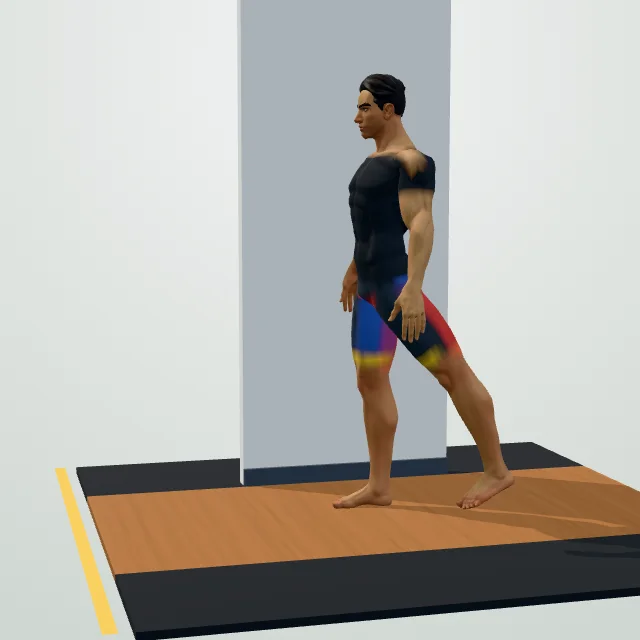
How to do it
- Stand next to a wall or support, holding it for balance.
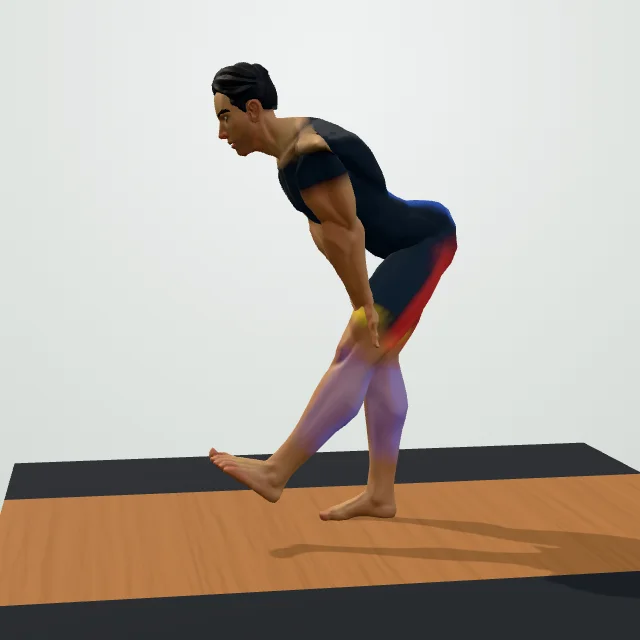
- Swing one leg forward and back in a controlled arc.
- Let the range build gradually over several swings.
- Keep your torso upright throughout the swing.
- Switch to side-to-side swings if programmed.
- Repeat on the other leg for the same count.
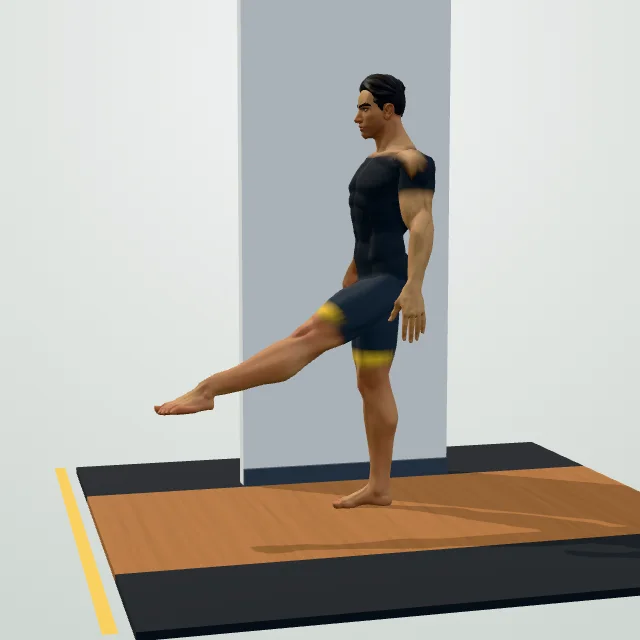
Coach cues
- Hold support, stand tall.
- Swing controlled, not forced.
- Let the range build gradually.
- Switch legs, repeat evenly.
Breathing: Breathe naturally and steadily; there is no need to time breaths to each swing.
Common mistakes
Make it easier / Make it harder
Leg swings move a straight or slightly bent leg through a controlled front-to-back or side-to-side arc while you balance on the other leg. It is a dynamic warm-up drill, not a static stretch — the point is a rhythmic, momentum-driven swing that takes the hip through a bigger range than everyday walking, right before a run, squat or lunge session.
What muscles do leg swings work?
Front-to-back swings alternate loading the hip flexors as the leg swings forward and the hamstrings and glutes as it swings back, taking both through a bigger range than most warm-up drills manage. Side-to-side swings instead work the abductors and adductors, the muscles that move the leg away from and back toward the midline. On the standing leg, the glutes and outer hip work hard to keep you balanced and level while the swinging leg moves, which is a real stability demand even though the drill looks passive.
Benefits
- Hip range of motion. The swinging momentum takes the hip through more range than a slow, deliberate stretch typically reaches.
- Warms the exact muscles a run or squat needs. Hip flexors, hamstrings, glutes and adductors are all cycled through before they are asked to work under load.
- Balance and hip stability. Standing on one leg while the other swings trains the standing-side hip stabilisers at the same time.
- Fast. A short set in each direction, on each leg, is enough — no equipment or space beyond room to swing a leg.
Technique: swing plane, control and range
Stand next to a wall or sturdy support for balance, and swing one leg forward and back in a controlled arc, keeping your torso upright rather than leaning forward or back to compensate. Let the swing build gradually in range over the first few reps rather than forcing a maximal stretch on the first swing. For the side-to-side version, swing the leg across your body and back out to the side, keeping your hips facing forward throughout rather than rotating with the leg. The most common technical error is using momentum to force the leg higher than a controlled swing allows, which turns a warm-up drill into an uncontrolled, jerky movement with less benefit and more risk. Keep the swing smooth and rhythmic, not a series of forced maximum stretches.
How to program leg swings
| Use | Work | Rest |
|---|---|---|
| Pre-run or pre-lift warm-up | 8-10 swings each direction, each leg | none, move to the next drill |
| Hip mobility session | 2-3 rounds of 10 swings each direction | 15-20 sec between rounds |
Leg swings belong early in a warm-up, after a few minutes of light general movement to raise body temperature, and before the main run, squat or lunge work. They pair naturally with hip circles and arm circles in the 6-minute dynamic warm-up, covering the hips, shoulders and legs together in a few minutes. The guide to warming up explains how to sequence a full warm-up routine if you want more structure than a single drill.
Variations and progressions
Beginners or anyone with balance concerns should hold a wall or sturdy support throughout, keeping the swing range smaller and slower until the movement feels controlled. Runners often add front-to-back swings specifically before a run, since this plane most closely matches the hip flexor and hamstring demand of running, while side-to-side swings suit anyone about to squat, lunge or do lateral sports movement. Once the basic swing feels easy, doing it without holding support adds a genuine balance challenge on the standing leg.
Leg swings vs. static stretching
A static hamstring or hip flexor stretch, held for 20-30 seconds without movement, is better suited to a cool-down or a separate flexibility session, since holding a deep static stretch right before hard effort can temporarily reduce power output. Leg swings, as a dynamic, moving drill, raise blood flow and hip range without that trade-off, which is why dynamic drills like leg swings are the more common choice immediately before a workout, with static stretching saved for afterward.
Safety and who should modify it
Hold a wall or support and keep the range smaller if you have balance issues, hip or hamstring pain, or are new to dynamic warm-ups — check with a doctor or physiotherapist first if pain is present.
Leg swings are low-risk when done in a controlled, rhythmic way, but forcing the range with momentum on a cold, unwarmed hip can strain the hip flexors or hamstrings. Build the range gradually rep by rep, and stop if you feel sharp joint or muscle pain rather than a normal stretch sensation.
Workout plans with this exercise
More exercises for mobility and stretching
Questions people ask
What muscles do leg swings work?
Are leg swings a dynamic stretch?
How do I do leg swings properly?
Why are leg swings good before a workout?
Leg swings vs. static stretching — which should I do before a workout?
How many leg swings should I do?
Can I do leg swings without holding a wall?
General fitness information, not medical advice. Check with a doctor or physiotherapist before starting if you have a health condition, an injury or are pregnant. Stop if you feel chest pain, dizziness or sharp pain.