Legs · Gym
The lying leg curl: prone machine form for hamstrings
The lying leg curl, done face-down on a machine, isolates the hamstrings by bending the knee alone, with no hip movement to help. It is a straightforward way to add direct hamstring work after squats or deadlifts.
- Primary
- Hamstrings
- Secondary
- Calves
- Level
- Beginner
- Type
- Isolation · Both sides together
- Sets × reps
- 3 × 10-12 reps
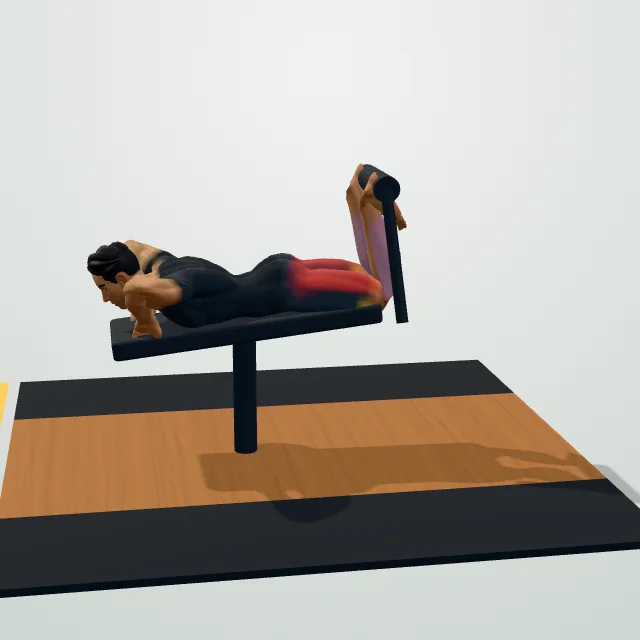
How to do it
- Lie face down on the machine, ankle pad just above your heels.
- Line your knees up with the machine’s pivot point.
- Press your hips down into the bench.
- Curl your heels up toward your glutes through a full range.
- Squeeze briefly at the top of the curl.
- Lower back down under control, hips staying flat.
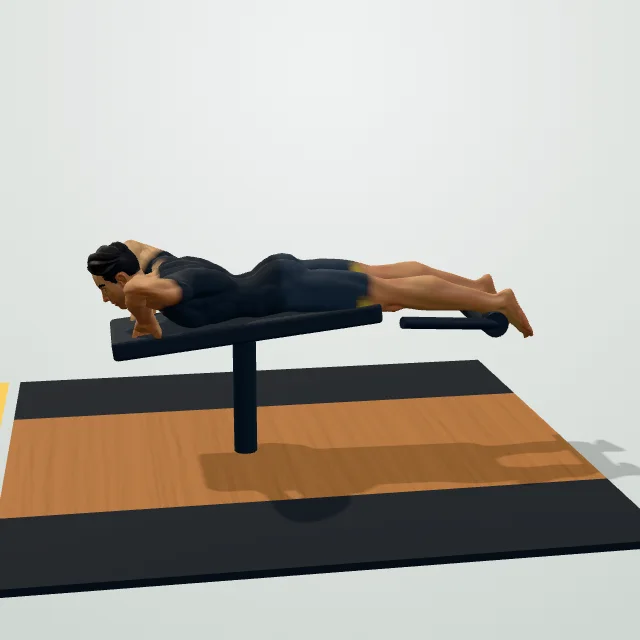
Coach cues
- Hips pressed flat on the bench.
- Curl your heels toward your glutes.
- Squeeze at the top of the rep.
- Lower back down under control.
Breathing: Breathe out as you curl the weight up, breathe in as you lower it back down.
Common mistakes
Make it easier / Make it harder
Sets and reps by goal
| Goal | sets | reps | Rest |
|---|---|---|---|
| Strength | 3–5 | 6–8 | 90–120 s |
| Muscle growth | 3–4 | 10–15 | 60–90 s |
| Endurance | 2–3 | 15–20 | 30–60 s |
The lying leg curl, also called a prone leg curl, is done face-down on a machine, curling a padded lever up toward your glutes by bending your knees alone. Because your hips stay flat against the bench the whole time, the movement isolates the hamstrings without any help from the glutes or lower back, which is why it is a common accessory after squats or deadlifts rather than a main lift.
What muscles does the lying leg curl work?
The hamstrings — covered in our leg exercises hub — do essentially all the work bending the knee against the machine's resistance, with the calves assisting slightly depending on your ankle position. Because the hip stays fixed, this is a true isolation exercise for the hamstrings — unlike a Romanian deadlift or hip thrust, where the glutes share a large part of the load. That makes the lying leg curl a useful way to target hamstring size and strength directly, on top of the hip-hinge work you already do elsewhere.
Lying leg curl benefits
- Direct hamstring isolation. With the hips fixed, all the work goes into the hamstrings rather than being shared with the glutes.
- Complements hip-hinge exercises. Deadlifts and RDLs load the hamstrings through hip extension; the leg curl adds knee-flexion work those moves do not train as directly.
- Simple to load and progress. A weight stack makes small, controlled load increases easy to track over time.
- Useful for knee and hamstring health. Building hamstring strength through knee flexion is a common part of injury-prevention and rehab programs for the knee.
Lying leg curl proper form
Lie face down on the leg curl machine with the padded lever resting just above your heels, not on your ankle bones, and your knees lined up with the machine's pivot point. Press your hips down into the bench and keep them there for the whole set — lifting your hips is the most common way lifters cheat extra weight up. Curl your heels up toward your glutes through a full range of motion, squeezing at the top, then lower back down under control rather than letting the weight stack drop. Keep your grip on the handles light and steady, using it for stability rather than to help yank the weight up.
How to program lying leg curls
| Goal | Sets | Reps | Rest |
|---|---|---|---|
| Muscle / hypertrophy | 3 | 10-12 | 45-60 sec |
| Strength | 3 | 6-8 | 60-90 sec |
| Endurance | 2-3 | 15-20 | 30-45 sec |
The lying leg curl works well as an accessory after a main hip-hinge or squat movement, once or twice a week, since it is unlikely to limit your recovery for heavier compound lifts the way training it first would. Increase the weight in small steps once you can complete every rep with your hips pinned to the bench and full control on the way down.
Lying leg curl vs seated leg curl
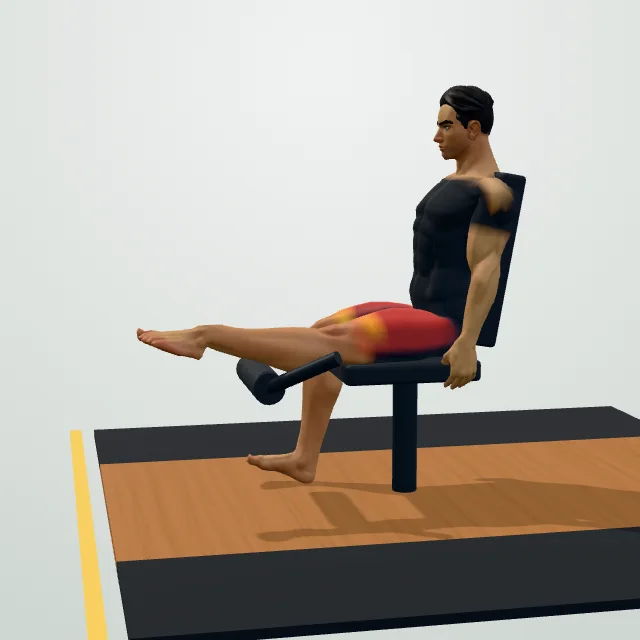
The seated leg curl positions your hip at roughly 90 degrees, which puts the hamstrings in a slightly shortened position at the hip compared with the lying version, where your hip is fully extended. Some lifters feel the lying version more through the muscle belly and the seated version more toward the top near the glute, though the difference is subtle and both are effective — many gym programs simply use whichever machine is available, or rotate between the two.
Alternatives without a leg curl machine
If a lying leg curl machine is not available, the Nordic hamstring curl is a bodyweight alternative that also isolates the hamstrings through knee flexion, though it is considerably more demanding and best suited to a more advanced lifter. A hip-hinge exercise like a Romanian deadlift will not train the exact same knee-flexion pattern, but it still builds meaningful hamstring strength if isolation equipment is not an option.
Safety and who should modify it
Keep your hips pressed down on the bench throughout the set. Lifting your hips to move more weight reduces the hamstring benefit and can strain your lower back.
Use a weight you can control through the full range without your hips or lower back lifting off the pad. Stop if you feel sharp pain in the back of your knee or the hamstring itself, rather than normal muscle fatigue, and check with a doctor or physiotherapist before this exercise if you have a current hamstring strain or knee injury.
Workout plans with this exercise
General fitness · Beginner
Beginner Full-Body Gym Workout
Build muscle · Intermediate
Push Pull Legs Split (6 Days)
Strength · Intermediate
Upper/Lower Split (4 Days)
Build muscle · Intermediate
5-Day Body-Part Split (Bro Split)
Build muscle · Intermediate
Leg Day Workout (Gym)
More exercises for legs
Questions people ask
What is a lying leg curl?
What muscles does the lying leg curl work?
Is the lying leg curl or seated leg curl better?
How do you use a leg curl machine correctly?
Are lying leg curls effective?
What is a good lying leg curl alternative without a machine?
Why do my hips lift off the bench during leg curls?
General fitness information, not medical advice. Check with a doctor or physiotherapist before starting if you have a health condition, an injury or are pregnant. Stop if you feel chest pain, dizziness or sharp pain.