Legs · Home or gym
The single-leg Romanian deadlift: hinge and balance in one move
The single-leg RDL hinges at the hip while standing on one leg, training the hamstring and glute of the standing leg alongside the balance and hip control both legs need.
- Primary
- HamstringsGlutes
- Secondary
- Outer hipsLower backAbs
- Level
- Intermediate
- Type
- Compound · One side, then the other
- Sets × reps
- 3 × 8-10 reps per side
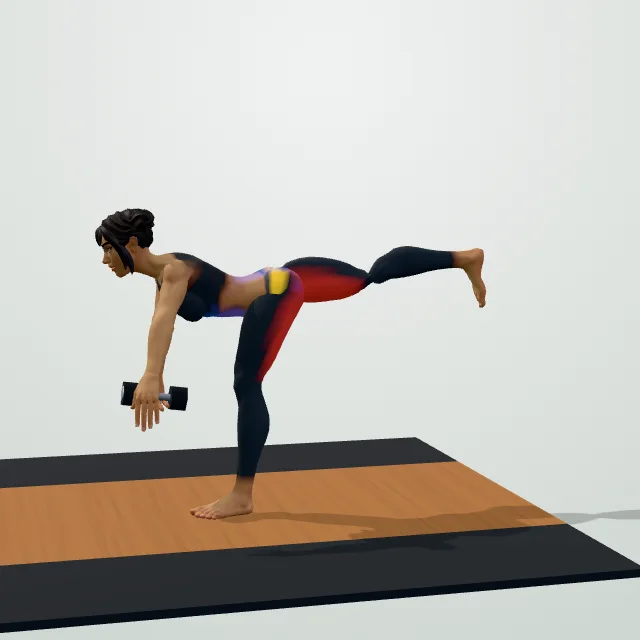
How to do it
- Stand on one leg, knee slightly bent, weight in one or both hands.
- Hinge forward at your hip, free leg extending straight back.
- Keep your hips square as your torso lowers.
- Lower until you feel a strong hamstring stretch or balance limit.
- Drive through your standing leg to return to upright.
- Squeeze your glute at the top, then repeat or switch sides.
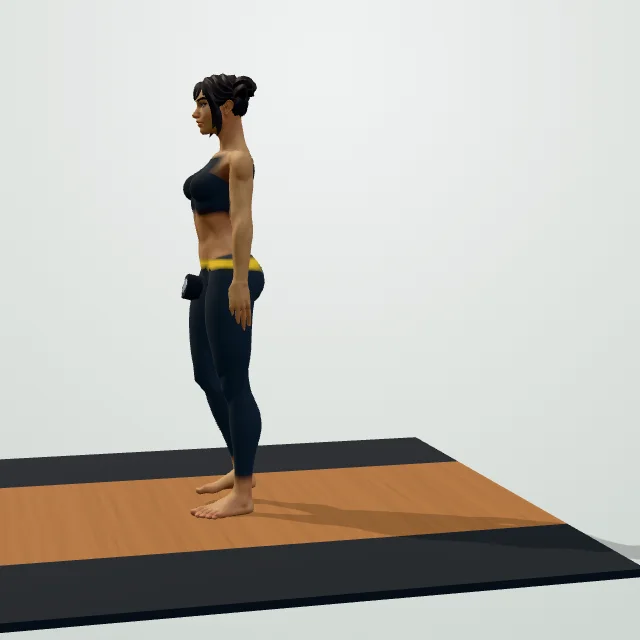
Coach cues
- Standing knee soft, hips square.
- Free leg reaches straight back.
- Hinge, don’t squat, at the hip.
- Drive up through the standing leg.
Breathing: Breathe in as you hinge forward and lower, breathe out as you drive back up to standing.
Common mistakes
Make it easier / Make it harder
Sets and reps by goal
| Goal | sets | reps | Rest |
|---|---|---|---|
| Strength | 3–5 | 3–6 | 2–4 min |
| Muscle growth | 3–4 | 6–12 | 90–150 s |
| Endurance | 2–3 | 15–20 | 30–60 s |
The single-leg Romanian deadlift hinges at the hip while standing on one leg, letting the other leg extend straight back for counterbalance. It trains the same hamstring-and-glute stretch as a two-leg RDL, plus the hip and ankle stability needed to hinge on a single point of contact — a combination that carries over well to running, hiking and change-of-direction sports.
What muscles does the single-leg RDL work?
The standing leg's hamstrings — covered in our leg exercises hub — control the hinge and drive you back to standing, with the glutes finishing the hip extension. The hip abductors work hard to stop your standing-leg hip from dropping or rotating, and your abs and lower back brace to keep your torso stable as it tips forward. Because one leg carries all of your body weight and balance at once, the single-leg RDL demands noticeably more core and hip control than the two-leg version at the same relative load.
Single-leg RDL benefits
- Corrects side-to-side imbalances. Training one leg at a time exposes a weaker or less stable side that a two-leg hinge can hide.
- Balance and hip control. The standing leg must stabilize your hip and ankle throughout, building carryover to running and sport.
- Hamstring strength with less total load. Because one leg does all the work, you get a strong hamstring training effect with lighter weight than a two-leg RDL needs.
- Scales from bodyweight to loaded. It works with no weight at all for beginners, or with a dumbbell or kettlebell as strength builds.
Single-leg RDL proper form
Stand on one leg with a slight bend in that knee, holding a dumbbell in the opposite hand or both hands if you prefer. Hinge forward at your hip, letting your free leg extend straight back as a counterbalance while your torso lowers toward parallel with the floor. Keep your standing knee softly bent throughout — do not lock or re-bend it repeatedly — and keep your hips square, resisting the urge to let them rotate open. Lower until you feel a strong hamstring stretch or until your balance starts to waver, then drive through your standing leg to return to upright, squeezing your glute at the top.
If bodyweight-only single-leg RDLs already feel challenging, that is a normal starting point — this exercise is significantly harder than it looks, even without added weight.
How to program the single-leg RDL
| Goal | Sets | Reps (each leg) | Rest |
|---|---|---|---|
| Balance and technique | 2-3 | 6-8, bodyweight or light | 45-60 sec |
| Strength | 3 | 8-10 | 60-90 sec |
Master a bodyweight or lightly loaded version with full balance and control before adding real weight — the exercise loses its value if you are wobbling through every rep. Progress load in small steps once you can complete every rep with a controlled hinge and a stable hip, following the same approach as our progressive overload guide. It fits well as an accessory after your main squat or hinge, once or twice a week.
Single-leg RDL variations and progressions
If balance is the limiting factor rather than strength, try a kickstand version, lightly touching your back toe to the floor for extra stability while keeping most of your weight on the front leg. Beginners can start with no weight at all to focus purely on the hip hinge and balance, then progress to the dumbbell Romanian deadlift to build the same pattern on two legs before returning to the single-leg version with load. A single-leg glute bridge is a useful complementary exercise that trains the glutes without the balance demand.
Safety and who should modify it
Keep a soft bend in your standing knee and your hips square throughout. If your balance breaks down before your hamstrings feel worked, reduce the range or the weight rather than fighting for the rep.
Practice near a wall or sturdy chair while you learn the balance component, and stop if you feel sharp hip, knee or lower-back pain rather than normal muscle effort. Anyone with balance problems, vertigo, or a recent lower-body injury should check with a doctor or physiotherapist before adding single-leg balance work.
Workout plans with this exercise
More exercises for legs
Questions people ask
What is a single-leg Romanian deadlift?
What muscles does the single-leg RDL work?
Can you do a single-leg RDL with no weight?
How do you balance during a single-leg RDL?
Single-leg RDL vs regular RDL: what is the difference?
What are RDLs good for?
How do you make the single-leg RDL easier?
General fitness information, not medical advice. Check with a doctor or physiotherapist before starting if you have a health condition, an injury or are pregnant. Stop if you feel chest pain, dizziness or sharp pain.