Legs · Home, no equipment
How to do the cossack squat for hip mobility and strength
The cossack squat shifts your weight from a wide stance onto one bent leg while the other stays straight, training inner-thigh strength and hip mobility in the same movement.
- Primary
- Inner thighsQuadsGlutes
- Secondary
- Hamstrings
- Level
- Intermediate
- Type
- Compound · Alternate sides
- Sets × reps
- 3 × 6-8 reps per side
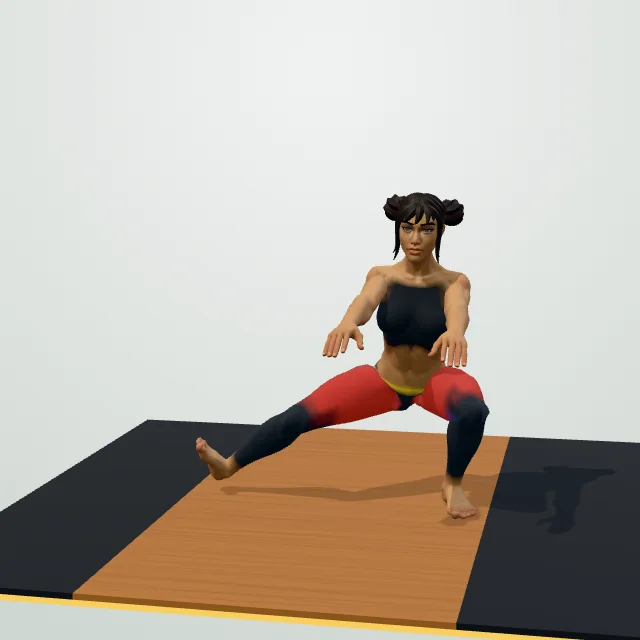
How to do it
- Stand with feet wider than shoulder-width, toes forward or turned out.
- Hold your arms out in front, or a weight at your chest.
- Shift your weight over one leg and bend that knee to squat down.
- Keep that foot flat and the other leg straight with its heel down.
- Go only as deep as your mobility allows without lifting the bent-leg heel.
- Push through the bent leg to shift back to center, then repeat on the other side.
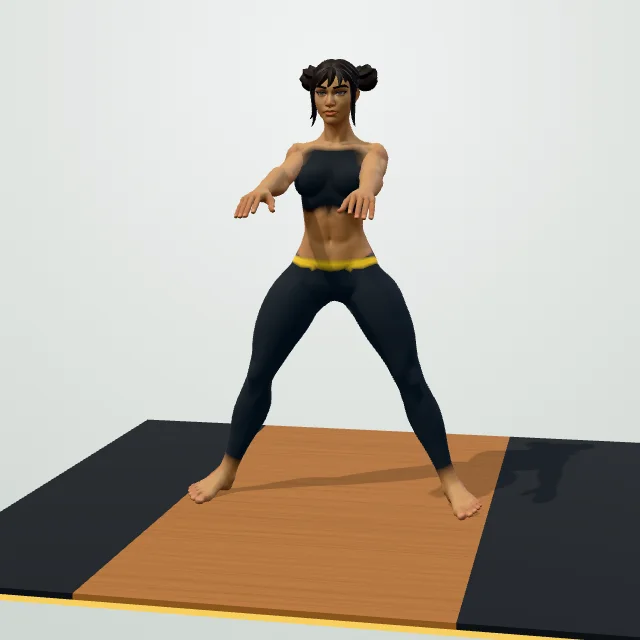
Coach cues
- Feet wide, toes forward or slightly out.
- Shift your weight over one bent knee.
- Keep the straight leg’s heel on the floor.
- Push back to center through the bent leg.
Breathing: Breathe in as you shift down into the bent leg, breathe out as you push back to center.
Common mistakes
Make it easier / Make it harder
Sets and reps by goal
| Goal | sets | reps | Rest |
|---|---|---|---|
| Strength | 4–5 | 3–6 | 2–4 min |
| Muscle growth | 3–4 | 6–12 | 90–150 s |
| Endurance | 2–3 | 15–25+ | 30–60 s |
The cossack squat is a wide-stance, side-to-side squat: you shift your body weight over one bent leg while the other leg stays straight with its foot flat, then reverse the shift to the other side. It builds strength through a range of hip motion that regular front-facing squats and lunges rarely reach, which makes it a favorite warm-up and accessory move for lifters and athletes who need hip mobility as much as leg strength.
What muscles does the cossack squat work?
The adductors (inner thigh) of the straight leg get stretched under load, which is the main training effect that sets this exercise apart from a standard squat. The bent leg's quads and glutes do the pressing work to control the descent and drive back up, and the hamstrings assist on both sides through the shift. Because you are strengthening the adductors through a long, loaded range rather than just stretching them, cossack squats build both mobility and strength in one movement.
Cossack squat benefits
- Hip and groin mobility under load. Loaded stretching builds usable range of motion better than passive stretching alone.
- Inner-thigh and lateral strength. Most training happens in the front-to-back plane; cossack squats fill the side-to-side gap.
- Warm-up value. Many lifters use a few slow, controlled cossack squats before heavy squats or deadlifts to open the hips.
- No equipment needed. It works as a pure bodyweight move and scales easily with a kettlebell or dumbbell later.
Cossack squat proper form
Set your feet wider than shoulder-width, toes pointing forward or turned out slightly, and hold your arms out in front or a weight at your chest for balance. Shift your weight over one leg and bend that knee to squat down, keeping that foot flat on the floor, while the opposite leg stays straight with its heel down and its toes pointing up or slightly out. Keep your chest up and your hips low rather than leaning far forward, and go only as deep as your hip and ankle mobility allow without your bent-leg heel lifting. Push through the bent leg to shift your weight back to center, then repeat on the other side.
Depth should build gradually over weeks as your hips open up — do not force a deeper cossack squat than your current mobility supports, since that is when the groin and adductors are most likely to feel strained rather than stretched.
How to program cossack squats
| Goal | Sets | Reps (each side) | Rest |
|---|---|---|---|
| Mobility warm-up | 1-2 | 5-8, slow tempo | 15-30 sec |
| Strength / muscle | 3 | 6-8 | 60-90 sec |
Used as a mobility warm-up alongside moves like hip circles, one or two easy sets before your main lower-body lift is enough. Used as a strength accessory, three sets of controlled reps at a depth you can hold with good form works well, done two to three times a week. Add a cossack squat hold — pausing for a few seconds at your deepest comfortable point — to build both strength and range at the same time.
Cossack squat variations and progressions
Beginners with tight hips can prop the heel of the bent-leg side on a small wedge, or reduce the stance width and depth until mobility improves. To add resistance, hold a kettlebell or dumbbell at your chest (goblet-style) as you shift from side to side — this is the most common way lifters load cossack squats once bodyweight reps feel easy. If cossack squats feel too demanding on the hips right now, a lateral lunge covers similar ground with a shorter range and less hip flexibility required.
Cossack squat vs lateral lunge and side lunge
A lateral lunge (side lunge) steps out to one side and back to standing each rep, so the straight leg only briefly holds the stretched position. A cossack squat instead shifts continuously from a wide stance without resetting your feet, spending more time under the stretch on the straight leg and demanding more ankle and hip mobility to keep both feet flat. If your goal is mobility as much as strength, the cossack squat is the more targeted choice; if you want a simpler, more accessible pattern, start with the lateral lunge, or compare it to a wide-stance sumo squat, which loads both legs evenly instead of shifting side to side.
Safety and who should modify it
Cossack squats stretch the groin and inner thigh under load. Build depth gradually and never force a range that feels sharp or pulling rather than a normal stretch.
If you have hip, groin or knee pain, a history of adductor strain, or very limited hip mobility, keep the stance narrower and the depth shallow, or hold support for balance. Warm up your hips with a few easy reps before going deep, and stop if you feel sharp pain rather than a normal stretch sensation. Check with a doctor or physiotherapist first if you are recovering from a hip or groin injury.
More exercises for legs
Questions people ask
What is a cossack squat?
What muscles does the cossack squat work?
How do you do a cossack squat?
Why is it called a cossack squat?
How do you get deeper into a cossack squat?
Can you do cossack squats with weight?
Are cossack squats good for beginners?
General fitness information, not medical advice. Check with a doctor or physiotherapist before starting if you have a health condition, an injury or are pregnant. Stop if you feel chest pain, dizziness or sharp pain.