Legs · Home, no equipment
The sumo squat: wide-stance form, muscles and benefits
The sumo squat widens your stance and turns your toes out, shifting more work onto the inner thighs and glutes than a standard shoulder-width squat.
- Primary
- Inner thighsGlutesQuads
- Secondary
- Hamstrings
- Level
- Beginner
- Type
- Compound · Both sides together
- Sets × reps
- 3 × 12-15 reps
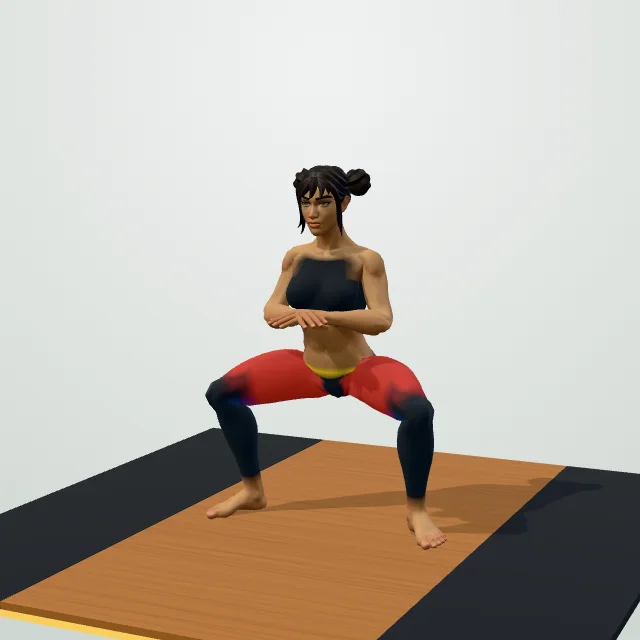
How to do it
- Stand with feet wider than shoulder-width, toes turned out 30-45 degrees.
- Keep your chest up, weight centered over your whole foot.
- Bend your hips and knees together to sit down and back.
- Track your knees in the same direction as your toes.
- Lower until thighs are near parallel, heels staying flat.
- Push through your whole foot to stand back up.
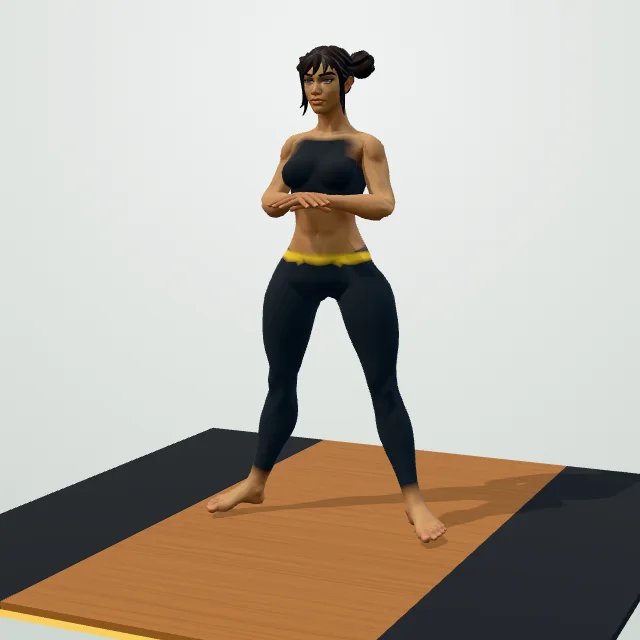
Coach cues
- Feet wide, toes turned out.
- Sit down and back, chest up.
- Knees track over your toes.
- Push through your whole foot to stand.
Breathing: Breathe in as you sit down and back, breathe out as you push through your feet to stand.
Common mistakes
Make it easier / Make it harder
Sets and reps by goal
| Goal | sets | reps | Rest |
|---|---|---|---|
| Strength | 4–5 | 3–6 | 2–4 min |
| Muscle growth | 3–4 | 6–12 | 90–150 s |
| Endurance | 2–3 | 15–25+ | 30–60 s |
The sumo squat is a squat done with a wide stance and your toes turned out, named after the wide, low stance sumo wrestlers use before a match. That wider, turned-out setup shifts more of the load onto the inner thighs than a shoulder-width squat, while still training the glutes and quads through a similar range.
What muscles does the sumo squat work?
Turning your toes out and widening your stance puts the adductors (inner thighs) into a stronger position to help drive the movement, which is the main difference from a standard squat. The glutes — covered in our glutes hub — and quads still do most of the work lowering and raising your body weight, and the hamstrings assist through the hip. Because the wider stance shortens the range your hips travel compared with a narrow squat, many people can also squat a little deeper in a sumo stance before their lower back rounds.
Sumo squat benefits
- Inner-thigh and glute emphasis. The wide, turned-out stance trains the adductors more directly than most squat variations.
- Comfortable depth for some people. The wider stance and turned-out feet let many lifters reach a fuller squat depth with less ankle mobility required.
- No equipment needed. A bodyweight sumo squat works anywhere, and it scales easily by holding a dumbbell or kettlebell.
- Variety for a leg or glute day. Rotating stance widths across a training week spreads the work across slightly different parts of the same muscles.
Sumo squat proper form
Stand with your feet noticeably wider than shoulder-width and your toes turned out about 30 to 45 degrees. Keep your chest up and your weight centered over your whole foot, then bend your knees and hips together to sit down and back, letting your knees track in the same direction as your toes rather than caving inward. Lower until your thighs are close to parallel with the floor, or as deep as you can go with your heels staying flat and your lower back staying neutral, then push through your whole foot to stand back up.
If you are holding a dumbbell or kettlebell between your legs, keep it close to your body the whole way down and up, the same way you would in a goblet squat.
How to program sumo squats
| Goal | Sets | Reps | Rest |
|---|---|---|---|
| Strength | 3-4 | 8-10 | 90 sec |
| Muscle / glutes and inner thighs | 3 | 12-15 | 45-60 sec |
| Endurance | 2-3 | 15-20, with pulses at the bottom | 30-45 sec |
Bodyweight sumo squats respond well to higher reps (12-15) since the range is often shorter than a narrow squat; add a dumbbell or kettlebell held at your chest once bodyweight reps stop being challenging. Sumo squats fit well as a glute- and inner-thigh-focused accessory after a main leg or hinge movement, two to three times a week, such as in a glute workout plan.
Sumo squat vs plie squat vs regular squat
"Plie squat" and "sumo squat" describe the same wide, turned-out stance and are often used interchangeably, though plie squat sometimes implies a slightly narrower stance borrowed from ballet, done on the balls of the feet with a heel raise at the top. Compared with a regular, shoulder-width bodyweight squat, a sumo squat shifts more work to the inner thighs and often allows a bit more depth, while a standard squat keeps the quads and glutes as the main focus. Neither is strictly better — most well-rounded leg programs use both stance widths across a week.
Safety and who should modify it
Keep your knees tracking in the same direction as your toes throughout. Only squat as deep as you can control with your heels flat and your lower back neutral.
If you have hip, knee or groin pain, use a narrower stance or shallower depth, and warm up your hips before going deep. A Cossack squat is a useful alternative if you want more hip-mobility work alongside inner-thigh strength. Anyone with a hip or knee injury should check with a doctor or physiotherapist before adding a wide, deep squat variation to their program.
More exercises for legs
Questions people ask
How do you do a sumo squat?
What muscles does the sumo squat work?
Is a sumo squat better than a regular squat?
What is the difference between a sumo squat and a plie squat?
Are sumo squats good for glutes?
Can you do sumo squats with weight?
How many sumo squats should I do?
General fitness information, not medical advice. Check with a doctor or physiotherapist before starting if you have a health condition, an injury or are pregnant. Stop if you feel chest pain, dizziness or sharp pain.