Back · Home, no equipment
Doorframe row: a back workout using just a door
Grip a sturdy doorframe, lean back, and pull your chest toward it — a no-equipment way to train a rowing pattern when a gym or bar is not an option.
- Primary
- Upper backLats
- Level
- Beginner
- Type
- Compound · Both sides together
- Sets × reps
- 3 × 10-15 reps
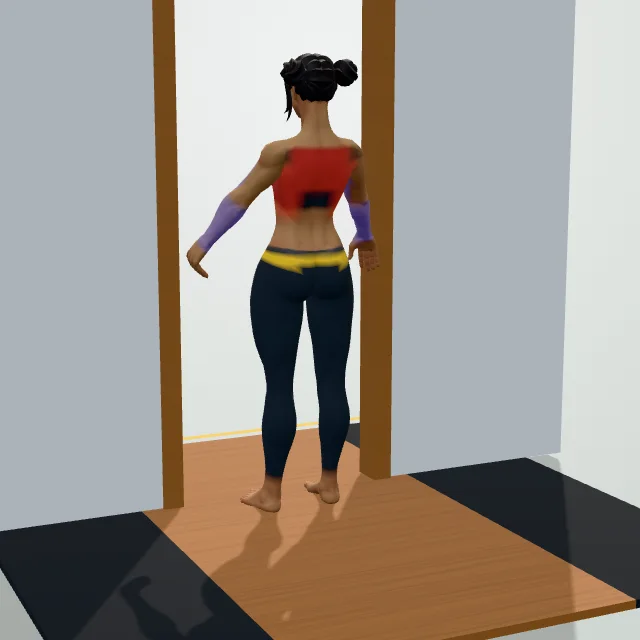
How to do it
- Grip a sturdy doorframe at chest height with both hands.
- Walk your feet back and lean your bodyweight backward, arms straight.
- Keep your body in one straight line from heels to shoulders.
- Pull your chest toward the frame, driving your elbows back.
- Lower back out under control to a full arm extension.
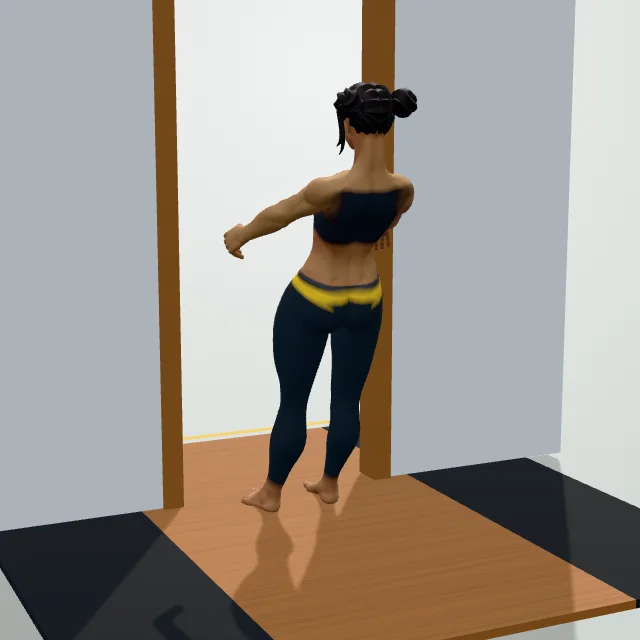
Coach cues
- Body straight, lean your weight back.
- Squeeze your shoulder blades together.
- Pull your chest to the frame.
- Lower out slowly, no sagging.
Breathing: Breathe in as you lean back to the start, breathe out as you pull your chest to the frame.
Common mistakes
Make it easier / Make it harder
Sets and reps by goal
| Goal | sets | reps | Rest |
|---|---|---|---|
| Strength | 4–5 | 3–6 | 2–4 min |
| Muscle growth | 3–4 | 6–12 | 90–150 s |
| Endurance | 2–3 | 15–25+ | 30–60 s |
What muscles does the doorframe row work
Like other rowing exercises, it targets your upper back and lats, the muscles that pull your shoulder blades together and your arms back toward your torso. Your biceps assist with bending the elbow, and your forearms grip the frame for the whole set. Because you are leaning your bodyweight back rather than hanging fully below a bar, your abs and legs also work isometrically to keep your body in a stable, straight line as you pull.
Benefits
The main advantage is accessibility — almost every home has a doorframe, so this exercise removes the "no equipment" excuse for training a rowing pattern. It is also naturally self-limiting: you control the difficulty entirely with how far you lean back, so it works for a complete beginner and can still be made demanding by leaning further out. For anyone traveling, working from a small apartment, or simply between gym memberships, it keeps a rowing pattern in a training week without any planning ahead.
Technique: foot placement, lean and pull
Choose a doorframe that feels solid, not a hollow or loose one, and grip the sides of the frame at around chest height with both hands. Walk your feet back and lean your bodyweight backward with straight arms until you feel real tension through your back, keeping your body in one straight line from your heels to your shoulders rather than bending at the hips. Pull your chest toward the frame by driving your elbows back, squeezing your shoulder blades together at the top, then lower back out under control to a full arm extension.
Your foot position controls the difficulty: feet closer to the frame with a small lean is easier, feet further back with a bigger lean angle is harder, since more of your bodyweight hangs from your arms. Start at a lean where you can complete 10–12 reps with your body staying straight and controlled. You should feel this across your upper back and into your biceps, not primarily in your lower back — if your hips sag or your back rounds, you have leaned back too far for your current strength.
How to program the doorframe row
3 sets of 10–15 reps, resting 60–90 seconds, works well as either a main back exercise for someone training entirely at home or a filler exercise on a day the gym is not accessible. Since the resistance is fixed by your bodyweight and lean angle rather than external weight, progress mainly comes from leaning further back or slowing the tempo, rather than adding load. It fits naturally into a bodyweight-only or minimal-equipment home workout.
Alternatives
An inverted row under a bar or sturdy table trains a very similar pattern with the body more fully horizontal, which typically allows a bigger range and more resistance if you have access to a bar. A resistance band row anchored to the same doorframe (looped around the hinge side or a door anchor) is a good progression once bodyweight doorframe rows feel too easy, since a band adds adjustable resistance beyond just your lean angle.
Safety
Test that the doorframe is solid and free of loose trim or hinges before committing your full bodyweight to it — a hollow-core door or a loose frame is not safe to pull against. Keep your body in a straight line rather than letting your hips sag, and stop if you feel sharp discomfort in your wrists or shoulders rather than the expected muscle fatigue in your back. If you are at all unsure whether a doorframe can take your weight, choose a lower lean angle or find a different anchor point entirely.
Workout plans with this exercise
Questions people ask
What muscles does a doorframe row work?
Is a doorframe safe to pull on?
Doorframe row vs inverted row: which is better?
How do I make doorframe rows harder?
Can beginners do doorframe rows?
Why do my hips sag during a doorframe row?
General fitness information, not medical advice. Check with a doctor or physiotherapist before starting if you have a health condition, an injury or are pregnant. Stop if you feel chest pain, dizziness or sharp pain.