Full body · Home, no equipment
Inchworm exercise: walk out to a plank and back
The inchworm bends forward, walks your hands out to a plank, holds briefly, then walks your feet back to your hands. It doubles as a hamstring stretch and a shoulder and core warm-up in one move.
- Primary
- HamstringsAbs
- Secondary
- Front deltsChestTriceps
- Level
- Beginner
- Type
- Compound · Both sides together
- Sets × reps
- 2 × 6-8 reps
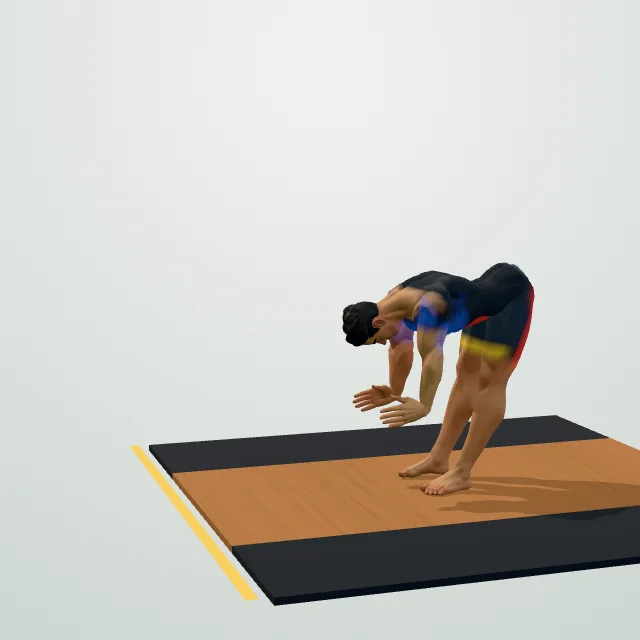
How to do it
- Stand with feet hip-width apart.
- Hinge at the hips and fold forward, hands reaching toward the floor.
- Walk your hands out to a plank position.
- Hold the plank briefly, keeping your body in a straight line.
- Walk your feet forward toward your hands.
- Stand back up to finish the rep.
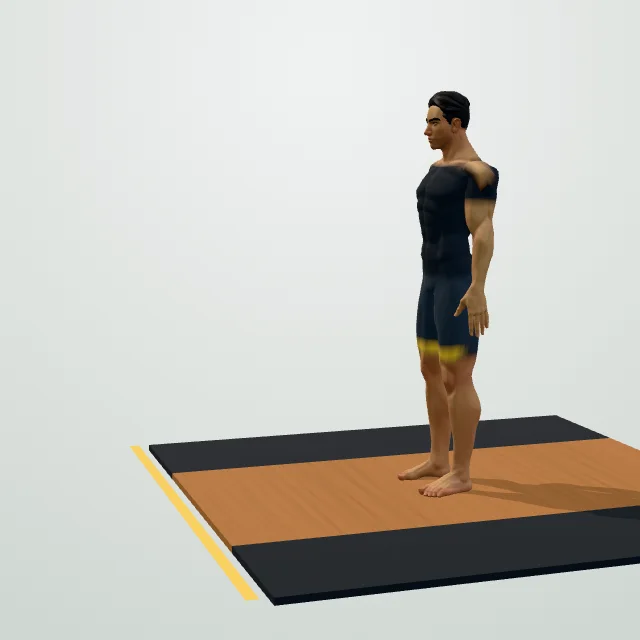
Coach cues
- Fold forward, hinge at the hips.
- Walk your hands out to a plank.
- Hold the plank, body in a straight line.
- Walk your feet in, then stand tall.
Breathing: Exhale as you fold and walk out; breathe steadily during the plank hold.
Common mistakes
Make it easier / Make it harder
The inchworm exercise chains a forward fold, a hand walkout to a plank, and a walk-back of the feet into one flowing movement. Along the way it stretches the hamstrings, loads the shoulders and core in a plank, and mobilises the hips — which is why it shows up so often as a warm-up rather than a stand-alone strength move.
What muscles does inchworm work?
The hamstrings are stretched hard during the forward fold and the walk-out, especially if you keep your legs straight. Once you reach the plank position, the abs brace to hold a flat line from shoulders to heels, and the front delts, chest and triceps support your bodyweight through your hands. Walking the feet back in toward the hands then repeats the hamstring stretch under a bit more control, since you are lowering into it rather than just holding still. Few warm-up moves combine a genuine stretch with genuine core and shoulder loading the way inchworm does.
Benefits
- Hamstring and hip mobility. The forward fold and walk-out give a dynamic hamstring stretch, often more comfortable for tight hamstrings than a static toe touch.
- Shoulder and core primer. Passing through a plank position wakes up the same muscles used in push-ups and planks, useful before an upper-body or core session.
- Full-body warm-up in one move. Few single exercises touch the hamstrings, core, shoulders and wrists in one continuous movement.
- No equipment. Just floor space and enough room to walk your hands out and back.
Technique: the fold, the walk-out and the walk-back
Start standing with feet hip-width apart. Hinge at the hips and fold forward, letting your hands reach toward the floor — bend your knees slightly if your hamstrings are tight, rather than rounding your lower back to force straight legs. Walk your hands forward, one at a time, until you reach a solid plank position with your shoulders over your wrists and your body in a straight line from head to heels. Hold that plank briefly, then walk your feet forward toward your hands in small steps, keeping your legs as straight as comfortable, until you are folded forward again, then stand back up. The common technical fault is letting the hips sag or pike up in the plank phase — treat that moment exactly like holding a proper plank, not just a pass-through position.
How to program inchworm
| Use | Volume | Rest |
|---|---|---|
| Warm-up before lifting or running | 2 sets of 6-8 reps | 20-30 sec |
| Mobility / flexibility session | 2-3 sets of 5-6 reps, slower tempo | as needed |
| Core or conditioning circuit | 1-2 sets of 8-10 reps | 30-45 sec |
Inchworm earns its place at the start of a workout, before dynamic stretches and the main lifts, since it combines a hamstring stretch with shoulder and core activation in one movement. It also works as a standalone mobility drill on a rest day or alongside a stretching routine, done slower and held a beat longer in each position. Because the range of motion is large, quality matters more than speed — six to eight smooth reps beat twelve rushed ones.
Variations and progressions
Beginners with tight hamstrings should bend the knees generously during the fold and walk-out rather than forcing straight legs, which usually just rounds the lower back instead of stretching the hamstrings. Adding a push-up at the bottom of the plank — inchworm to push-up — turns the drill into more of a strength and conditioning move, popular in CrossFit-style circuits. For a gentler version that skips the plank load entirely, walk the hands out only partway before walking them back, keeping the focus purely on the hamstring stretch.
Inchworm vs. other floor warm-ups
Inchworm and the bear crawl both move you across the floor on hands and feet, but they train different qualities: bear crawl challenges sustained core bracing while limbs move, while inchworm is built around a stretch-and-load cycle rather than continuous movement. Many warm-ups use inchworm first to open the hamstrings and hips, then a bear crawl or plank hold to layer on sustained core work.
Safety and who should modify it
Bend your knees during the fold if your hamstrings are tight, and skip the push-up variation if you have wrist or shoulder pain.
Inchworm asks the lower back to control a big forward fold, so keep the spine neutral rather than rounding hard to force a deeper stretch — ease into range gradually instead. Stop if you feel sharp lower back pain, not the normal pull of a hamstring stretch, and check with a doctor or physiotherapist if you have an existing back or shoulder injury.
Workout plans with this exercise
More exercises for full body
Questions people ask
What muscles does inchworm work?
How do you do an inchworm exercise?
Is inchworm a good warm-up exercise?
Is inchworm a stretch or a strength exercise?
Can beginners do inchworm if their hamstrings are tight?
What is inchworm to push-up?
How many inchworms should I do?
General fitness information, not medical advice. Check with a doctor or physiotherapist before starting if you have a health condition, an injury or are pregnant. Stop if you feel chest pain, dizziness or sharp pain.