Back · Home or gym
Negative pull-up: the slow lower that builds a first pull-up
You start at the top of a pull-up and lower yourself down as slowly as you can — the fastest way most beginners build the strength for a full rep.
- Secondary
- Upper backForearms
- Level
- Beginner
- Type
- Compound · Both sides together
- Sets × reps
- 3 × 3-6 reps
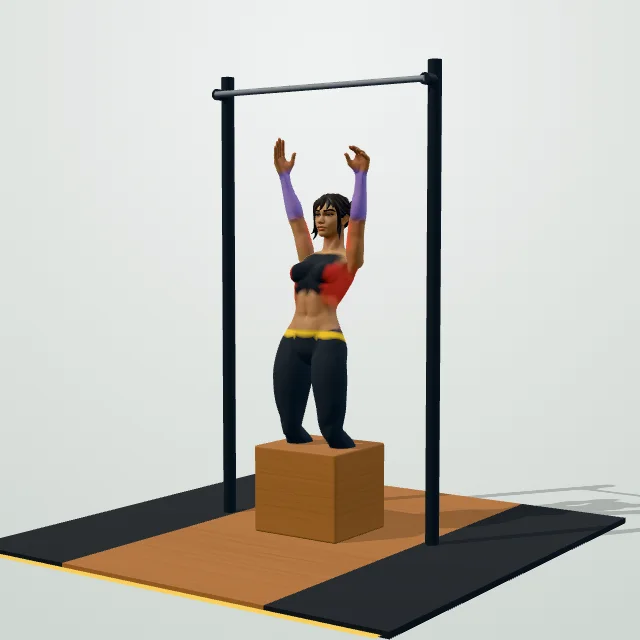
How to do it
- Jump, step, or get help up to the top pull-up position, chin over the bar.
- Set your shoulder blades down and brace your core.
- Lower yourself in a straight line, resisting gravity the whole way.
- Keep the descent slow and even, not fast at the top and slow at the bottom.
- Finish at a full, straight-armed hang, then reset for the next rep.
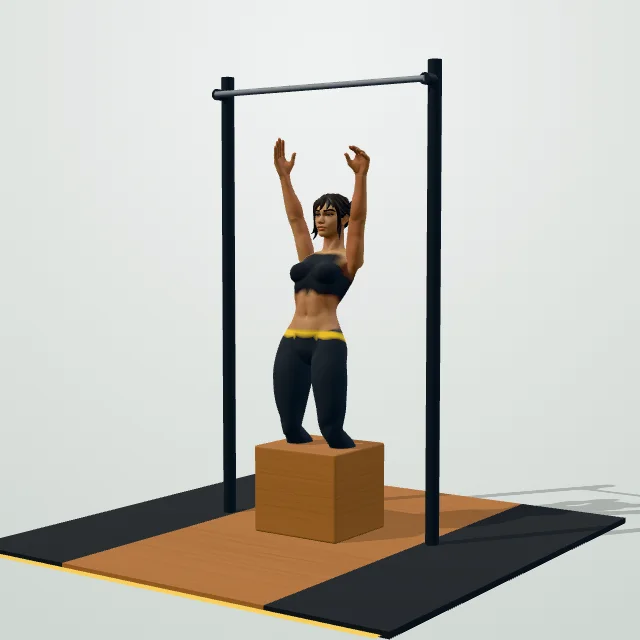
Coach cues
- Start from the top, chin over the bar.
- Lower slow, all the way down.
- Keep resisting, especially near the bottom.
- Reset to a full hang before the next rep.
Breathing: Breathe in as you settle at the top, breathe out slowly as you control the descent.
Common mistakes
Make it easier / Make it harder
Sets and reps by goal
| Goal | sets | reps | Rest |
|---|---|---|---|
| Strength | 3–5 | 3–6 | 2–4 min |
| Muscle growth | 3–4 | 6–12 | 90–150 s |
| Endurance | 2–3 | 15–20 | 30–60 s |
What muscles do negative pull-ups work
The same ones as a regular pull-up — your lats as the prime mover, with biceps, forearms, upper back and abs assisting. The difference is not which muscles work but how they work: lowering under control is an eccentric contraction, where the muscle lengthens while still under tension. Muscles can typically control more weight eccentrically than they can lift concentrically, which is exactly why negatives let a beginner train "pull-up strength" before they can complete a full rep.
Why negatives work
Eccentric strength usually develops ahead of concentric (lifting) strength, so training the lowering phase builds tendon and muscle capacity that transfers directly to the pulling phase. It also teaches the exact bar path and shoulder position a strict pull-up needs, without the discouragement of failing to get off the ground at all. Most people who cannot do a single pull-up can control a 5–8 second negative almost immediately, which gives useful, motivating feedback that progress is happening. It also builds real grip and shoulder stability, since staying tight through the whole descent asks more of your forearms and upper back than most people expect the first time they try it.
How to do a negative pull-up properly
Get to the top position any way that is convenient — jump up, step off a bench or box, or have a partner help you up — so your chin is above the bar and your elbows are bent. From there, lower yourself in a straight line, keeping your shoulder blades set and your core braced, resisting the pull of gravity the entire way rather than letting the last third drop fast. Aim for a slow, even descent rather than a fast start and a slow finish; most beginners rush the top half and then have nothing left for the bottom, which is backwards — the stretched position at the bottom is where control matters most for building a full rep later.
A useful target is a 5-second lower to start, building toward 8–10 seconds as you get stronger. Finish every rep at a full, straight-armed hang, then reset — jump or step back up rather than trying to do the concentric pull yourself before you are ready.
How to program negative pull-ups
Two to three sessions a week is enough; the muscle damage from slow eccentric work needs more recovery time than you might expect, so daily negatives usually backfire. A typical session is 3–5 negatives of 5–8 seconds each, resting 60–90 seconds between reps so you can control each one properly rather than rushing. Pair negatives with dead hangs for grip endurance and inverted rows or lat pulldowns for concentric back strength, and re-test a full pull-up attempt every couple of weeks rather than every session — see our pull-up progression plan for a structured version of this approach.
Alternatives and what comes next
If getting to the top position is itself too hard, a resistance band looped over the bar under your foot or knee reduces the bodyweight you need to lift, and an assisted pull-up machine does the same with a counterweight. Once your negatives feel controlled at 8–10 seconds and your dead hang feels solid, start testing single full reps — many lifters find the jump from a controlled 8-second negative to a real first pull-up happens within a few weeks.
Safety
Step down or drop off gently at the bottom rather than letting go while still under tension, and stop if you feel sharp pain in the shoulder or elbow rather than the expected muscle fatigue. Warm up your shoulders first, since a slow eccentric hold puts real load through the joint even without a concentric pull.
Questions people ask
What is a negative pull-up?
Do negative pull-ups actually help you get a real pull-up?
How many negative pull-ups should a beginner do?
How long should a negative pull-up take?
Negative pull-ups vs assisted pull-up machine: which is better?
Why can I do a negative but not a full pull-up?
General fitness information, not medical advice. Check with a doctor or physiotherapist before starting if you have a health condition, an injury or are pregnant. Stop if you feel chest pain, dizziness or sharp pain.