Abs and core · Home or gym
Hanging knee raise: the beginner-friendly path to hanging core work
The hanging knee raise has you hang from a bar and draw your knees up toward your chest, training the same core and grip as a full leg raise but with a shorter, more manageable lever.
- Primary
- AbsHip flexors
- Secondary
- Forearms
- Level
- Intermediate
- Type
- Isolation · Both sides together
- Sets × reps
- 3 × 10-12 reps
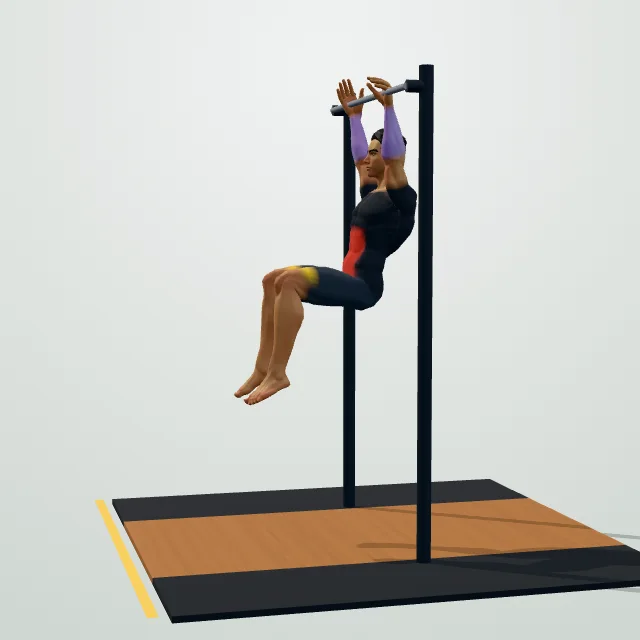
How to do it
- Hang from the bar, arms fully extended.
- Grip slightly wider than shoulder-width.
- Brace your core, shoulders pulled down.
- Bring your knees up toward your chest.
- Pause briefly at the top.
- Lower your legs back down slowly.
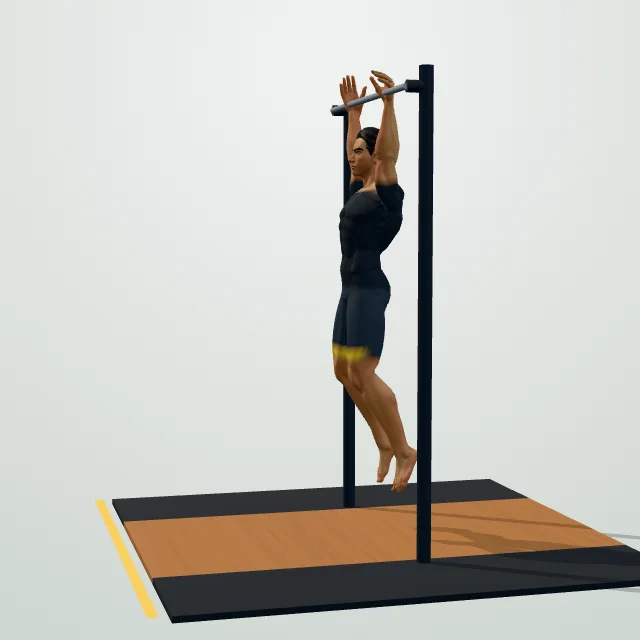
Coach cues
- Hang tall, shoulders down.
- Brace before you lift.
- Knees up toward your chest.
- Lower down slow, no swinging.
Breathing: Breathe out as you lift your knees, breathe in as you lower them.
Common mistakes
Make it easier / Make it harder
Sets and reps by goal
| Goal | sets | reps | Rest |
|---|---|---|---|
| Strength | 3–5 | 6–8 | 90–120 s |
| Muscle growth | 3–4 | 10–15 | 60–90 s |
| Endurance | 2–3 | 15–20 | 30–60 s |
The hanging knee raise has you hang from a pull-up bar and lift your bent knees up toward your chest, training the same abs, hip flexors, and grip as a hanging leg raise but with a shorter lever that makes it far more achievable for most people. It is the standard entry point into hanging ab work.
Muscles worked and why bending the knees matters
Your abs and hip flexors curl your pelvis and pull your knees up toward your chest, while your forearms and grip work hard just to keep you hanging on the bar. Bending your knees shortens the lever your hip flexors have to move, which makes the exercise noticeably easier than a straight-leg raise while still training the same muscles through a smaller but still effective range.
Benefits
Hanging knee raises build core strength alongside real grip and shoulder stability, since you have to control your whole bodyweight while lifting. They are a realistic goal for most gym-goers who find a full hanging leg raise or toes-to-bar out of reach, and they double as a stepping stone toward those harder variations. Like all ab exercises, they strengthen the core but do not spot-reduce fat from your stomach; visible abs depend on overall body fat from diet and total activity, not this one movement.
Technique in detail
Hang from a pull-up bar with an overhand grip slightly wider than shoulder-width, arms fully extended and shoulders pulled down rather than shrugged toward your ears. Brace your core and bring your knees up toward your chest without swinging your body or kicking with momentum, aiming to get your thighs at least parallel to the floor. Lower your legs back down slowly and under control, keeping your torso still rather than letting it swing forward and back between reps.
How to program it
3 sets of 10–12 controlled reps is a solid target once you can hang comfortably and hold your body still. If your grip fatigues before your abs do, use lifting straps so you get full benefit from the core work. Train it 2–3 times a week alongside pulling exercises like the pull-up, or as part of a dedicated core session with a bracing move such as the plank.
Variations and progressions
Add a slight twist at the top, bringing your knees toward one shoulder then the other on alternating reps, to bring the obliques in more directly. Slow the lowering phase down to 3 seconds for extra time under tension without changing the range. Once bent-knee raises feel easy for a full set without swinging, progress to the hanging leg raise with straight legs, which uses a longer lever and demands considerably more hip-flexor and core strength.
For beginners
If hanging itself is the limiting factor, build tolerance with a dead hang first, or use an assisted machine or resistance band under your knees to reduce the effective bodyweight you are lifting and lowering. A slightly bent-arm hang or lower bar height that lets your feet stay close to the floor can also make early attempts feel less intimidating.
Safety notes
Avoid swinging your body or kicking your legs up with momentum, which shifts load onto your shoulders and lower back instead of your abs and increases injury risk. Anyone with a shoulder injury, existing lower back pain, or a grip or elbow condition should check with a physiotherapist and build up with the lying leg raise first. Stop for sharp shoulder or back pain — a strong core and grip burn is expected, joint pain is not.
Where it fits in a workout
Hanging knee raises work well early in a session, before your grip is fatigued from pulling exercises like the lat pulldown, or as a finisher in a dedicated abs workout. If you train from a structured plan, the plan builder can pair hanging knee raises with pulling movements and other core exercises across the week, rotating them with the crunch or dead bug for variety so your core gets worked from several different angles rather than the same pattern every session.
More exercises for abs and core
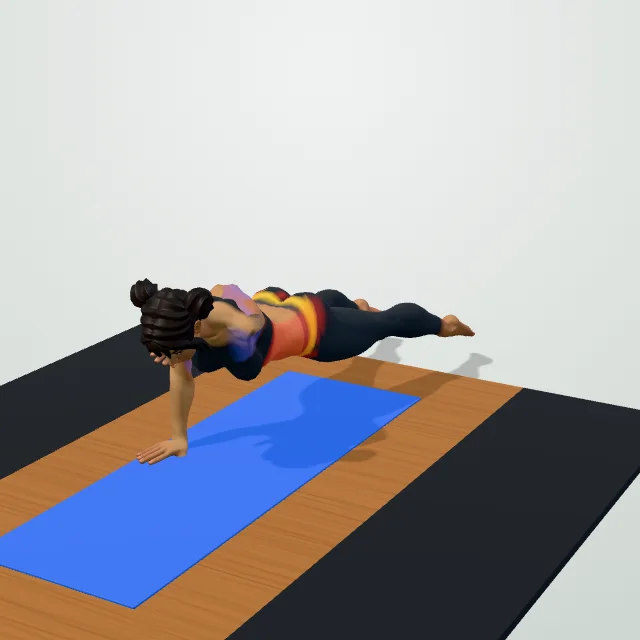
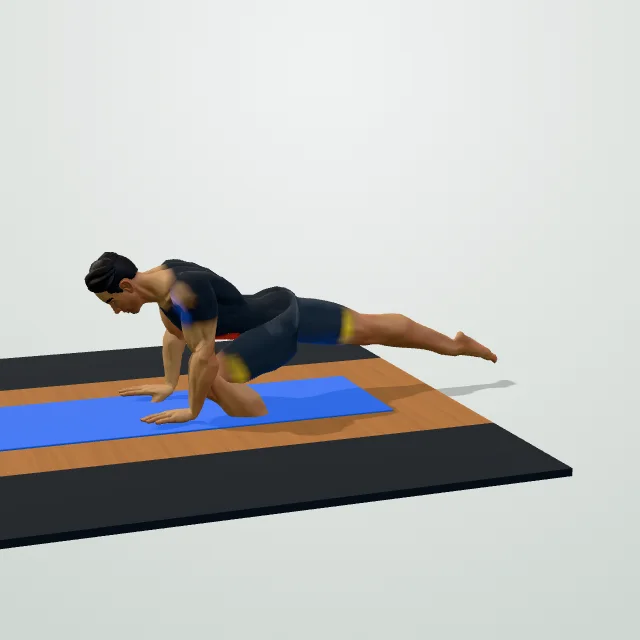
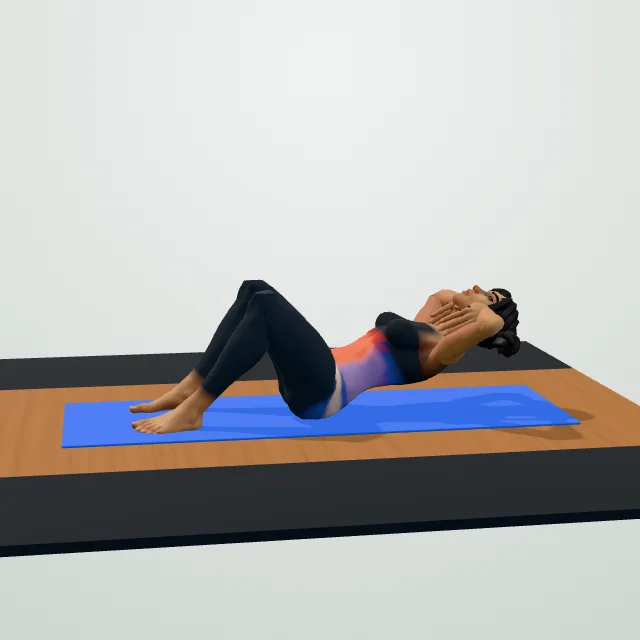
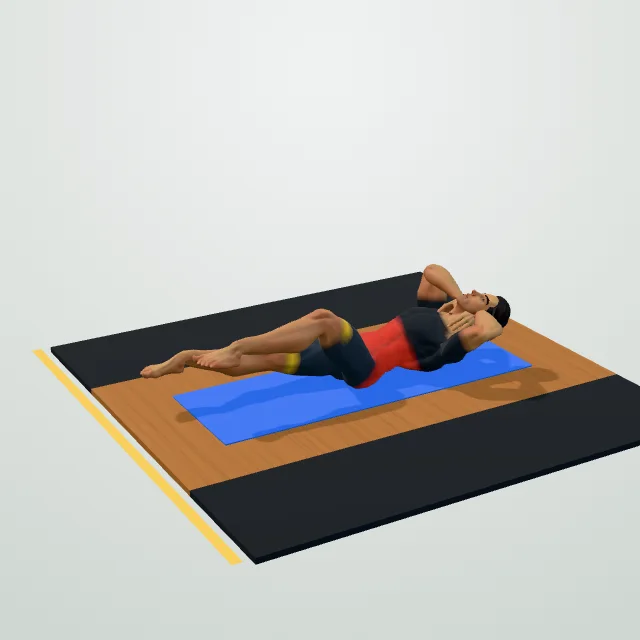
Questions people ask
How do you do a hanging knee raise correctly?
What muscles does the hanging knee raise work?
Is the hanging knee raise easier than the hanging leg raise?
How many hanging knee raises should a beginner do?
How do you progress from knee raises to leg raises?
Why does my body swing during hanging knee raises?
Are hanging knee raises good for obliques?
General fitness information, not medical advice. Check with a doctor or physiotherapist before starting if you have a health condition, an injury or are pregnant. Stop if you feel chest pain, dizziness or sharp pain.