Legs · Home, no equipment
How to do the reverse lunge, the knee-friendly lunge
The reverse lunge steps backward instead of forward, which most people find easier on the knees and steadier for balance. Here is the setup, technique and how it compares to a forward lunge.
- Secondary
- HamstringsInner thighs
- Level
- Beginner
- Type
- Compound · Alternate sides
- Sets × reps
- 3 × 10-12 reps per side
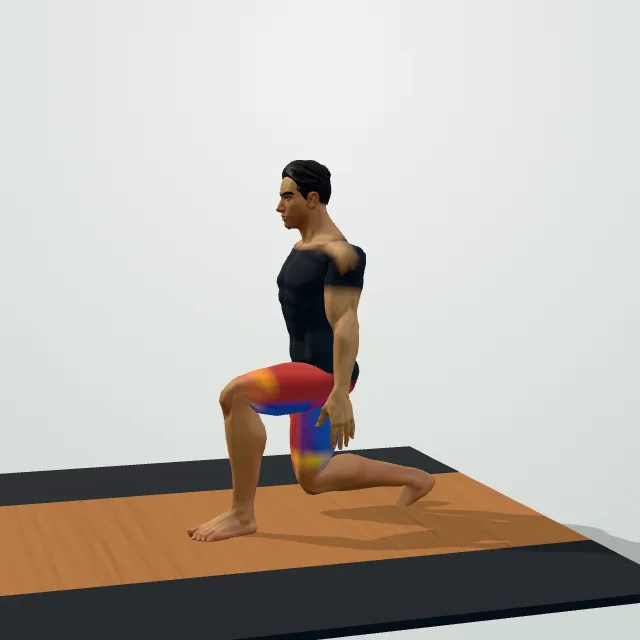
How to do it
- Stand tall with feet hip-width apart.
- Step one leg straight back onto the ball of your foot.
- Bend both knees, lowering your back knee toward the floor.
- Keep your front knee over your ankle and your torso upright.
- Push through your front heel to stand back up.
- Bring your back leg through, or reset to repeat on the same side.
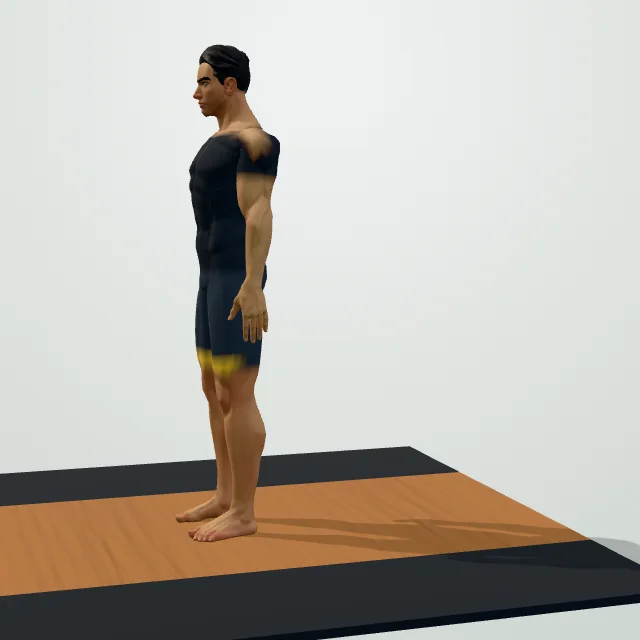
Coach cues
- Step straight back onto your toes.
- Keep most of your weight on your front leg.
- Front knee stays over your ankle.
- Drive through your front heel to stand.
Breathing: Breathe in as you step back and lower, breathe out as you push through your front heel to stand.
Common mistakes
Make it easier / Make it harder
Sets and reps by goal
| Goal | sets | reps | Rest |
|---|---|---|---|
| Strength | 4–5 | 3–6 | 2–4 min |
| Muscle growth | 3–4 | 6–12 | 90–150 s |
| Endurance | 2–3 | 15–25+ | 30–60 s |
A reverse lunge, also called a backward lunge, starts the same way as a forward lunge but sends your working leg backward instead of forward, then drives you back up through the leg that never left the ground. That single change, stepping back from a leg that is already planted, instead of stepping forward and catching your body weight, is why so many coaches recommend the reverse lunge first when someone is new to lunging or has cranky knees.
What muscles does a reverse lunge work?
The front leg, the one that stays planted, does almost all of the work: the quads extend the knee and the glutes drive the hip forward and up to standing. The hamstrings and adductors of the front leg help control the movement, while the back leg mostly assists with balance and a light push at the very top. Because the front leg never has to absorb a forward step, more of the total work stays concentrated in the glutes compared with a forward lunge.
Why reverse lunges are easier on your knees
In a forward lunge, your front leg steps into the position and has to decelerate your whole body weight the instant your foot lands, and that braking action pushes your knee further forward over your toes. In a reverse lunge, your front foot is already planted and still before you load it, so there is no landing to absorb and less forward travel of the knee over the toes. That lower shear force through the knee joint is the main reason reverse lunges are often recommended as the beginner-friendlier lunge variation, and as a substitute for people with sensitive or previously injured knees.
Reverse lunge vs forward lunge
Both exercises train the same muscles through a similar range, so the choice mostly comes down to knee comfort and goals rather than one being universally better. A forward lunge demands more control on the landing and slightly more quad-dominant loading from decelerating the step; a reverse lunge is gentler on the front knee and usually feels more stable, since your base leg is set before you load it. Many programs use both across a week, or start beginners on reverse lunges before introducing forward lunges once knee tracking is consistent.
Reverse lunge technique
From standing, step one leg straight back onto the ball of your foot, keeping your front foot planted and your front shin close to vertical. Bend both knees to lower your back knee toward the floor, letting your torso stay upright with your core braced rather than tipping forward. Keep most of your body weight on your front leg throughout, the back leg is there for balance and a small assist, not to carry the load. Push through your front heel and mid-foot to drive back up to standing, bringing your back leg through to finish the rep, or resetting to repeat on the same side.
How to program reverse lunges
| Goal | Sets | Reps (per leg) | Rest |
|---|---|---|---|
| Strength | 3 | 8-10 | 60-90 sec |
| Muscle | 3-4 | 10-12 | 45-60 sec |
| Endurance | 2-3 | 15-20 | 30-45 sec |
Because your front leg carries almost the whole load, reverse lunges respond well to added weight sooner than some other lunge variations. Start bodyweight, then add a pair of dumbbells once 12-15 clean reps per leg feel manageable, and keep 2-3 reps in reserve at the end of each set rather than grinding to failure. Two to three sessions a week is enough as a leg-day accessory; pair reverse lunges with a squat or hip-hinge movement in a leg day workout.
Reverse lunge variations
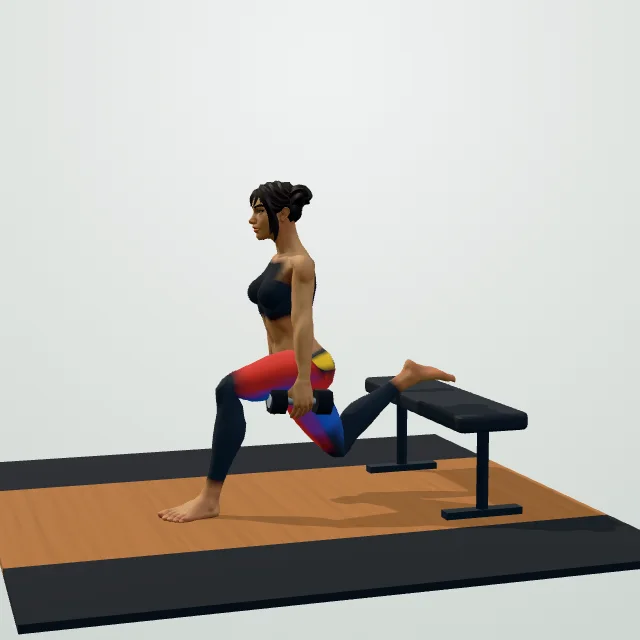
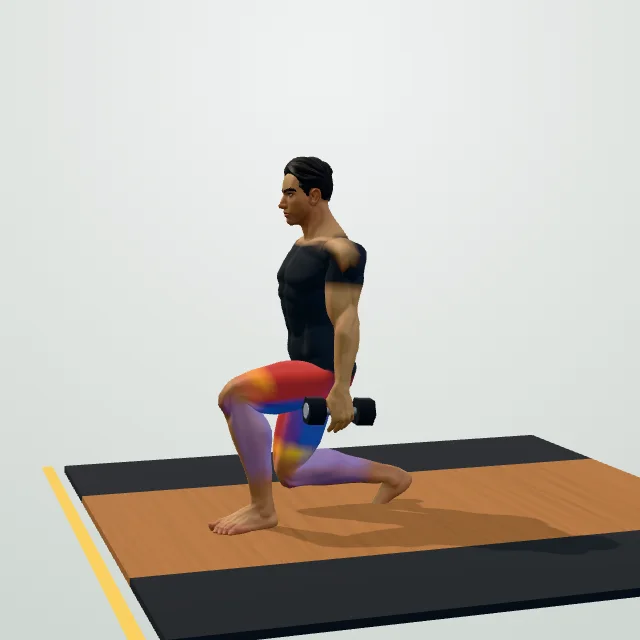
- Dumbbell or barbell reverse lunge: hold weight at your sides, at your chest, or on your back once form is solid.
- Reverse lunge with knee drive: drive the back knee up to hip height as you stand, adding a balance and hip-flexor challenge.
- Reverse lunge to overhead press: combine the lower-body step with a press for a full-body, conditioning-style set.
- Deficit or elevated reverse lunge: stand on a low step so the back leg reaches further down, increasing range and glute stretch.
- Split squat: remove the stepping motion entirely and hold a staggered stance for a version with no balance demand from stepping.
Reverse lunge safety
Because you step backward without seeing exactly where your foot lands, check that the floor behind you is clear and even before you start a set.
Reverse lunges are usually a good first lunge variation for people with knee pain or balance concerns, but stop for sharp joint pain rather than working through it, and keep your front knee tracking over your foot instead of caving inward. If you are recovering from a knee, hip or ankle injury, are pregnant, or have a balance disorder, check with a doctor or physiotherapist before adding reverse lunges, and hold a wall or chair for support while you build confidence in the step. See our guide to exercise for knee pain for more on training around a sensitive knee.
More exercises for legs
Questions people ask
How do you do a reverse lunge?
What muscles does a reverse lunge work?
Reverse lunge vs forward lunge: what is the difference?
Are reverse lunges better for bad knees?
How many reverse lunges should I do?
Can you do reverse lunges with dumbbells?
Are reverse lunges good for glutes?
General fitness information, not medical advice. Check with a doctor or physiotherapist before starting if you have a health condition, an injury or are pregnant. Stop if you feel chest pain, dizziness or sharp pain.