Abs and core · Home, no equipment
Flutter kicks: small kicks, constant core tension
Flutter kicks have you lie on your back and alternate small, fast kicks with straight legs, keeping your abs braced the whole time to stop your lower back from arching.
- Primary
- AbsHip flexors
- Secondary
- Quads
- Level
- Beginner
- Type
- Isolation · Alternate sides
- Sets × reps
- 3 × 30 s
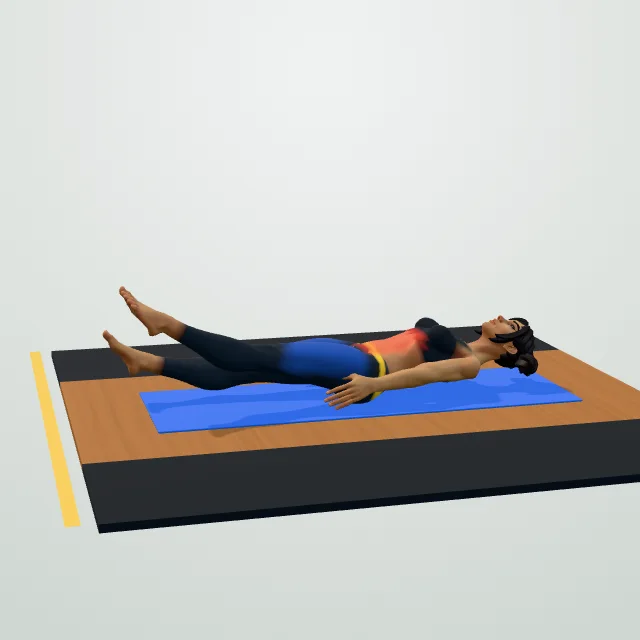
How to do it
- Lie on your back, hands by your sides.
- Lift straight legs a few inches off the floor.
- Press your lower back flat into the floor.
- Kick one leg up as the other kicks down.
- Alternate in small, quick movements.
- Keep your torso still throughout.
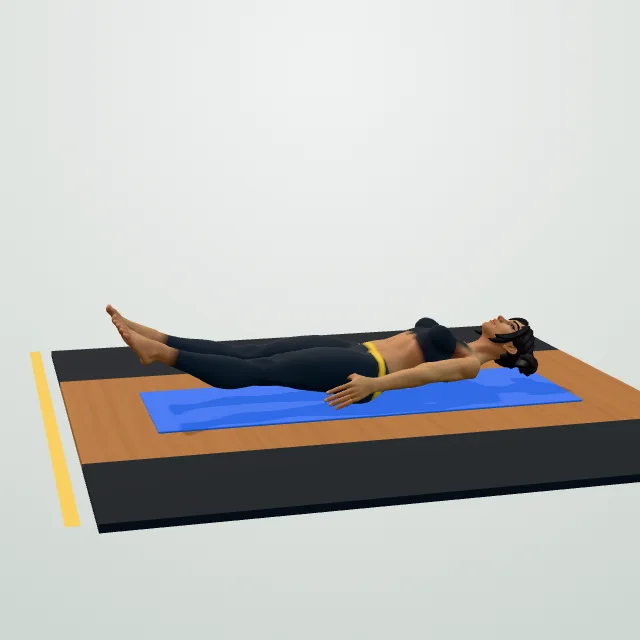
Coach cues
- Press your lower back flat.
- Keep the kicks small and quick.
- Alternate legs steadily.
- Raise legs higher if your back arches.
Breathing: Breathe steadily and continuously throughout the set; do not hold your breath.
Common mistakes
Make it easier / Make it harder
Flutter kicks have you lie on your back with your legs straight and lifted slightly off the floor, then alternate small, quick up-and-down kicks while keeping your lower back pressed flat. Unlike bigger, slower ab exercises, flutter kicks keep your core under near-constant, low-level tension for a longer stretch of time.
Muscles worked and why the kicks are small
Your hip flexors drive the small kicking motion, while your abs work continuously to brace your pelvis and keep your lower back from arching off the floor as your legs move. The kicks are kept small and controlled rather than big and swinging, because a bigger range makes it much harder for your abs to hold your lower back flat — the size of the kick matters less than how steady your torso stays.
Benefits
Flutter kicks build core and hip flexor endurance, since sets are usually done for time rather than reps, which carries over to swimming, running, and any sport involving repeated leg drive. They need no equipment and can be done anywhere, making them an easy addition to a home ab circuit. As with any ab exercise, flutter kicks strengthen the core but do not spot-reduce fat from your stomach — visible abs depend on overall body fat from diet and total activity, not this one movement.
Technique in detail
Lie on your back with your hands under your lower back or by your sides, legs straight and lifted a few inches off the floor. Press your lower back flat and brace your core, then kick one leg up slightly while the other kicks down, alternating in small, quick movements, similar to a swimming kick. Keep your legs low enough off the floor, and your kicks small enough, that your lower back stays pressed down the entire time — raise your legs higher if you feel your back starting to arch.
How to program it
3 sets of 20–30 seconds is a reasonable starting target, prioritizing a flat lower back over speed or how low the legs go. Because the movement is continuous, flutter kicks train muscular endurance well; increase the time before adding ankle weights or lowering your legs closer to the floor. Train them 2–3 times a week as part of a core circuit, alongside a bracing move like the plank or dead bug.
Variations and progressions
Keep your legs higher off the floor for an easier version while you build strength, since a higher leg position shortens the lever your hip flexors and abs have to control. Once the standard version feels easy, lower your legs closer to the floor, extend the hold time, or add ankle weights for more resistance. The lying leg raise is a related, slower exercise that trains similar muscles with a bigger range per rep.
Flutter kicks vs scissor kicks
Flutter kicks move the legs up and down in small, alternating beats, similar to a swimming kick, while scissor kicks move the legs side to side or open and close in a wider, slower crossing pattern. Both train the abs and hip flexors with the legs lifted off the floor, but scissor kicks use a bigger range per rep and flutter kicks rely more on speed and endurance.
Safety notes
The main risk is letting the lower back arch off the floor as your hip flexors fatigue, which shifts strain onto the spine — if this happens, raise your legs higher or shorten the set. Anyone with existing lower back pain, a hip flexor strain, or diastasis recti (abdominal separation) should check with a physiotherapist before adding this exercise. Do not hold your breath through the set, and stop for any sharp or shooting pain in the back or hips.
Where they fit in a workout
Flutter kicks work well as a finisher in an abs workout, after your main strength or cardio work is done, since the constant low-level tension suits a fatigued core better than a heavy compound lift would. They also show up in cardio-style circuits and HIIT sessions as a core-focused active-recovery station between higher-intensity moves.
More exercises for abs and core
Questions people ask
How do you do flutter kicks correctly?
What muscles do flutter kicks work?
How long should you do flutter kicks for?
What is the difference between flutter kicks and scissor kicks?
How do you make flutter kicks easier?
Why does my back arch during flutter kicks?
Do flutter kicks help lose belly fat?
General fitness information, not medical advice. Check with a doctor or physiotherapist before starting if you have a health condition, an injury or are pregnant. Stop if you feel chest pain, dizziness or sharp pain.