Chest · Home, no equipment
Knee push-up: build to a full push-up the right way
The knee push-up trains the same chest and arm muscles as a standard push-up with less bodyweight to press, making it a genuine building block, not a lesser version.
- Primary
- Chest
- Secondary
- TricepsFront delts
- Level
- Beginner
- Type
- Compound · Both sides together
- Sets × reps
- 3 × 8-15 reps
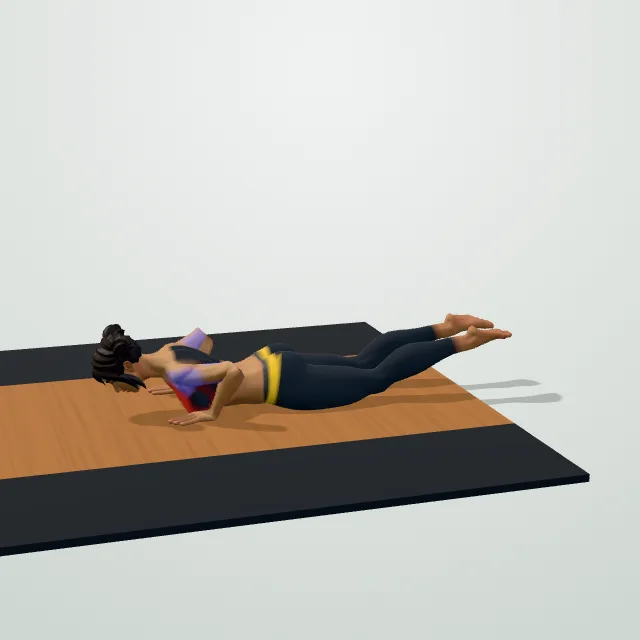
How to do it
- Kneel on a mat, hands slightly wider than shoulder width.
- Keep a straight line from head through hips to knees.
- Lower your chest toward the floor, elbows at about 45°.
- Keep the hip line straight, do not sag or pike.
- Press back up until your arms are straight.
- Repeat, keeping the same body line every rep.
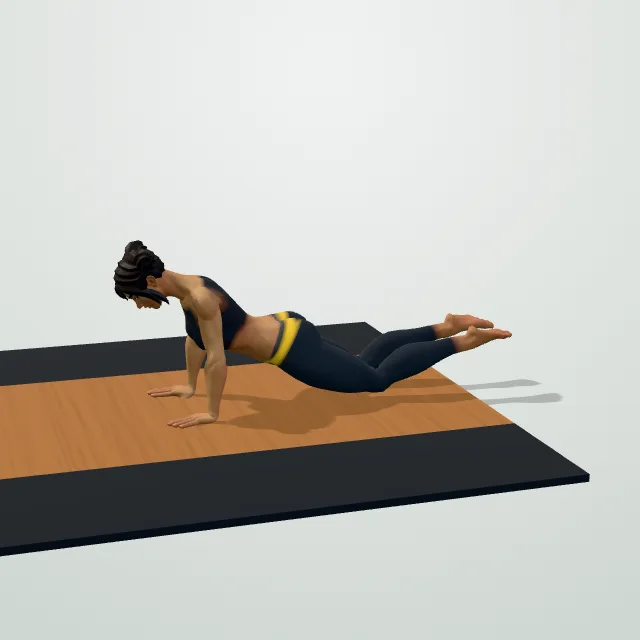
Coach cues
- Straight line, head to knees.
- Lower with elbows at about 45°.
- Chest toward the floor.
- Press up, keep the line straight.
Breathing: Breathe in as you lower your chest to the floor, then breathe out as you press back up.
Common mistakes
Make it easier / Make it harder
Sets and reps by goal
| Goal | sets | reps | Rest |
|---|---|---|---|
| Strength | 4–5 | 3–6 | 2–4 min |
| Muscle growth | 3–4 | 6–12 | 90–150 s |
| Endurance | 2–3 | 15–25+ | 30–60 s |
The knee push-up is a push-up done with your knees on the floor instead of your feet, which shortens the lever your upper body has to press against gravity. It is a genuine, effective way to build toward a full push-up, not a lesser substitute — the chest, shoulders and triceps still do real work here.
Muscles worked and why
The chest is the prime mover, with the front shoulders and triceps assisting, in the same pattern as a standard push-up. Resting your knees on the floor reduces roughly how much of your bodyweight you are pressing, which is what makes this version more manageable while training the identical muscles through a full range of motion.
Benefits
Because it needs less pressing strength than a standard push-up, the knee push-up lets beginners, people returning to exercise, or anyone rebuilding strength after time off train full-range reps with good form instead of struggling through a handful of shaky standard push-ups. Good form on an easier variation builds the strength and movement pattern that a full push-up needs later, which is a faster route to a real push-up than grinding out poor-quality full reps.
Hip position and body line
Kneel on a mat with your hands slightly wider than shoulder width, in line with your knees. The detail that matters most here is your hip line: keep a straight line from your head through your hips to your knees, rather than letting your hips sag down or pike up — a sagging hip line is the most common form break on this exercise and it takes real work away from the chest.
Lower your chest toward the floor, elbows at roughly 45° from your torso, keeping the same straight line the whole way down and back up. Press through your palms until your arms are straight, without your hips leading the movement upward before your chest does.
How to program it
3 sets of 8–15 reps with 60–90 seconds of rest works well while you are building toward a standard push-up. Once you can complete 15 or more clean reps with a solid hip line, that is your signal to try a few standard push-ups within the same session, following the same logic as progressive overload. Leave a rep or two in reserve rather than grinding every set to failure, per the RPE and RIR guide.
Progressing to a standard push-up
If knee push-ups are already comfortable, the incline push-up (hands elevated on a bench or step) is a good next step, since it still reduces the load but moves your feet back to the floor. From there, work toward the standard push-up. If knee push-ups still feel too demanding, the wall push-up is an easier starting point that removes even more of the load.
Knee push-up vs regular push-up
Both train the same muscles through the same range of motion at the upper body; the difference is how much of your total bodyweight you are pressing. A regular push-up presses roughly two-thirds of your bodyweight, while a knee push-up presses meaningfully less, which is exactly why it is a legitimate stepping stone rather than a different, easier exercise entirely.
Safety: who should modify it
Use a mat or cushioned surface under your knees to avoid discomfort during longer sets. Keep the straight head-to-knee line throughout — a sagging or piked hip line is the main way this exercise loses its effectiveness and can strain the lower back. This is also a reasonable option during pregnancy or recovery from injury when full push-ups are not appropriate; check with a doctor or physiotherapist if you are unsure.
Why it is not "cheating"
It is easy to assume the knee push-up does not really count because it looks like an easier version of the "real" exercise, but that framing misses how strength training actually works: any exercise that challenges a muscle through a full range of motion with progressively harder versions available is legitimate training, not a shortcut. Elite lifters use the same logic constantly — a lighter warm-up set of squats is not a lesser squat, it is an appropriate load for that point in the session. Treat the knee push-up the same way: the right exercise for where your strength is today, with a clear, honest path to the next level.
Questions people ask
What muscles does the knee push-up work?
Are knee push-ups effective?
How do I do a knee push-up with correct form?
How many knee push-ups should a beginner do?
When should I move from knee push-ups to regular push-ups?
Do knee push-ups build the same muscle as regular push-ups?
Are knee push-ups good for beginners and seniors?
General fitness information, not medical advice. Check with a doctor or physiotherapist before starting if you have a health condition, an injury or are pregnant. Stop if you feel chest pain, dizziness or sharp pain.