Shoulders · Home, no equipment
Pike push-up: build shoulder strength with no weights
Folding your hips into an inverted V turns a push-up into a vertical press, loading your shoulders far more than a standard push-up ever could.
- Primary
- Front deltsSide delts
- Level
- Intermediate
- Type
- Compound · Both sides together
- Sets × reps
- 3 × 6-10 reps
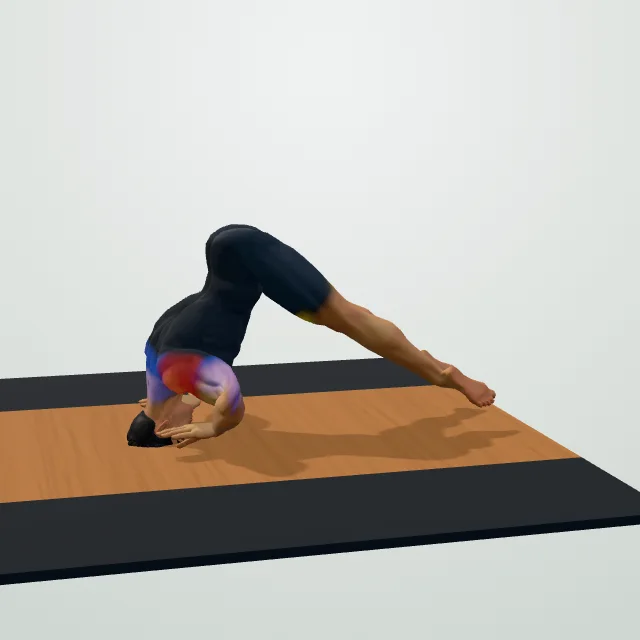
How to do it
- Start on hands and feet, hips lifted high in an inverted V.
- Keep hands and feet roughly shoulder-width apart.
- Bend your elbows to lower your head toward the floor.
- Keep your hips high throughout, not sagging toward a push-up.
- Press back up through your hands to full arm extension.
- Reset your pike position before the next rep.
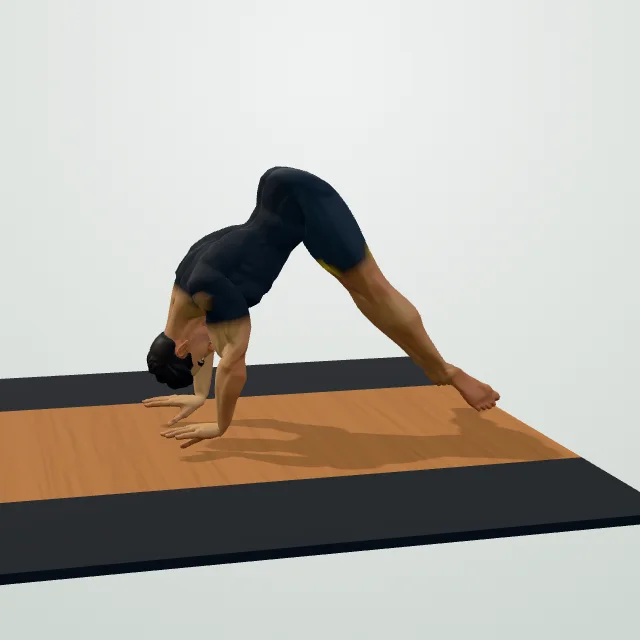
Coach cues
- Hips high, inverted V shape.
- Lower your head between your hands.
- Keep hips high, elbows tracking back.
- Press back up to full extension.
Breathing: Breathe in as you lower your head toward the floor, and breathe out as you press back up.
Common mistakes
Make it easier / Make it harder
Sets and reps by goal
| Goal | sets | reps | Rest |
|---|---|---|---|
| Strength | 4–5 | 3–6 | 2–4 min |
| Muscle growth | 3–4 | 6–12 | 90–150 s |
| Endurance | 2–3 | 15–25+ | 30–60 s |
The pike push-up starts in a downward-dog-like position, hips lifted high so your torso is close to vertical, then lowers your head toward the floor between your hands and presses back up. That hip angle turns a normally horizontal push-up into something much closer to a vertical shoulder press, using only your bodyweight and a bit of floor space.
Muscles worked by the pike push-up
The front and side delts do most of the pressing, since your body is angled close to upright, and the triceps finish the lockout at the top. Your upper back and traps stabilize your shoulder blades throughout, and your core and hip flexors work to hold the folded pike position steady rather than letting your hips sag or your lower back round.
Benefits
- No equipment needed. Just floor space, making it ideal for home or travel workouts.
- Builds toward the handstand push-up. A natural stepping stone if a full handstand press is your goal.
- Loads the shoulders more than a regular push-up. The vertical angle shifts far more bodyweight onto the delts.
- Easy to scale. Elevating your feet or hands changes the difficulty in small, controllable steps.
- Trains pressing and stability together. Holding the pike position while pressing builds shoulder strength and core control at the same time.
Technique
Start on hands and feet with your hips lifted high, forming an inverted V shape — feet and hands roughly shoulder-width apart, arms straight, and your gaze directed back toward your feet. Bend your elbows to lower the top of your head toward the floor between your hands, keeping your hips high rather than letting them drop toward a push-up position.
Press back up through your hands until your arms are extended and your hips are back at the top of the pike. Keep your core braced throughout so your lower back does not sag, and control the descent rather than dropping quickly toward the floor. Aim your gaze slightly forward rather than straight down, which helps keep your neck relaxed and your shoulder blades tracking correctly through the rep.
Sets, reps and progression
| Level | Sets × reps | Rest | Notes |
|---|---|---|---|
| Beginner | 3 × 5–8 | 60–90 sec | Hands elevated on a step or bench |
| Intermediate | 3 × 8–12 | 60 sec | Standard floor pike push-up |
| Advanced | 3 × 6–10 | 60–90 sec | Feet elevated for a steeper angle |
Add the pike push-up to a home shoulder or push routine such as the calisthenics workout for beginners, and progress toward a handstand push-up once you can do 10–12 clean reps with your feet elevated.
Pike push-up vs handstand push-up vs overhead press
The pike push-up is easier than a full handstand push-up because your feet stay on the ground and take some of your bodyweight, making it a sensible first step. Against a barbell overhead press, the pike push-up uses bodyweight resistance rather than external load, so it is easier to fit anywhere but harder to keep progressively overloading long-term.
Warming up your wrists and shoulders
Wrist mobility drills and a few slow shoulder circles before your first set make the pike position much more comfortable to hold. Our warm-up guide covers a fuller routine, and beginners following a structured plan like the 30-day home workout plan can build up pike push-up volume gradually alongside other bodyweight pressing work.
Safety notes
If this feels too hard on your wrists or shoulders, elevate your hands on a step or bench to reduce the angle and load until you build strength. Stop if you feel pinching pain in the shoulder rather than normal muscular fatigue, and build up gradually before trying feet-elevated or handstand progressions.
Because it uses only bodyweight and a wide range of easy regressions, the pike push-up is one of the safest ways to start building real overhead pressing strength at home.
Workout plans with this exercise
More exercises for shoulders
Questions people ask
What muscles does the pike push-up work?
Is the pike push-up harder than a regular push-up?
How do I make pike push-ups easier?
How do I make pike push-ups harder?
Are pike push-ups good preparation for handstand push-ups?
Are pike push-ups good for the shoulders?
How many pike push-ups should a beginner do?
General fitness information, not medical advice. Check with a doctor or physiotherapist before starting if you have a health condition, an injury or are pregnant. Stop if you feel chest pain, dizziness or sharp pain.