Mobility and stretching · Home, no equipment
Child's pose: sink your hips back, not your shoulders down
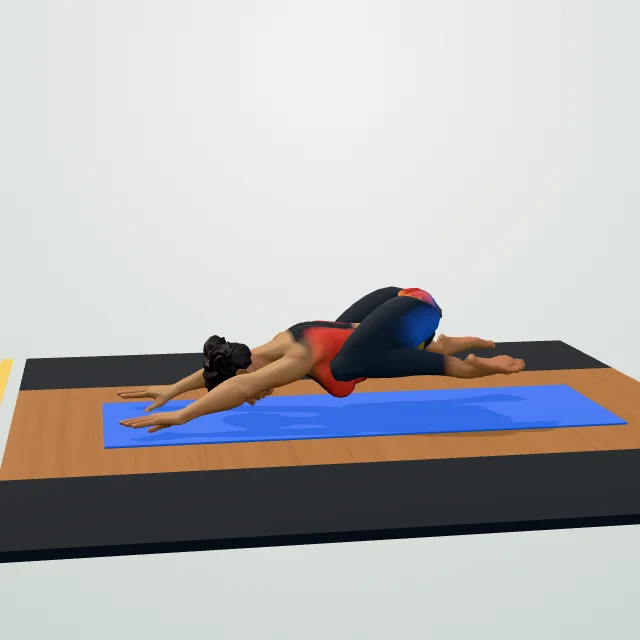
Sitting your hips back toward your heels with arms reached forward and your forehead resting down is a quiet, restful stretch for the lower back, hips and lats, and a common pause between other floor exercises.
- Primary
- Lower backLats
- Secondary
- GlutesHip flexors
- Level
- Beginner
- Type
- Isolation · Both sides together
- Sets × reps
- 1 × 45 s hold
How to do it
- Kneel with your big toes touching and knees spread apart.
- Sit your hips back toward your heels.
- Fold forward, reaching your arms out in front of you.
- Rest your forehead on the floor or a cushion.
- Let your chest sink toward the floor between your knees.
- Hold, breathing slowly into your lower back.
- Rise back up slowly when finished.
Coach cues
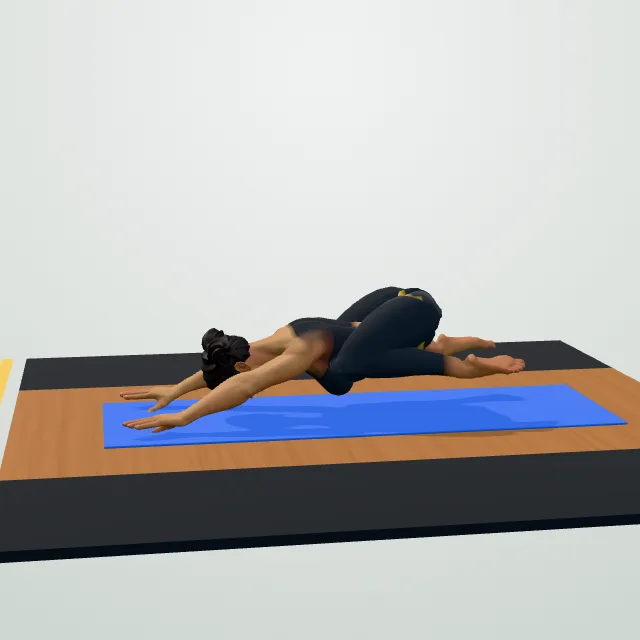
- Sink your hips back toward your heels.
- Reach your arms out, relax your shoulders.
- Let your chest sink between your knees.
- Breathe slowly into your lower back.
Breathing: Breathe slowly into your lower back throughout the hold; do not hold your breath.
Common mistakes
Make it easier / Make it harder
Child's pose, known in yoga as balasana, sinks your hips back toward your heels while your arms reach forward and your forehead rests on the floor. It is one of the gentlest resting stretches you can do, and it is often used as a pause between more demanding floor exercises or stretches.
Muscles worked and why this stretch helps
Child's pose lengthens the lower back and lats as your arms reach forward and your hips settle back, with the glutes and hip flexors sharing some of the stretch as your hips fold toward your heels. It is a passive stretch — gravity and your own body weight do most of the work — which makes it one of the more restful positions to hold compared with an active reach.
Benefits
Resting in child's pose can ease tightness across the lower back and hips after a deadlift or squat session, and many people use it simply to slow their breathing down between exercises. It also gently opens the lats and shoulders as the arms reach overhead, which can feel good after upper-body pulling work like lat pulldowns or rows. It will not fix chronic back pain by itself, but it is a low-effort way to decompress the spine after training.
Technique: sink the hips, keep the reach relaxed
Kneel on the floor with your big toes touching and knees spread comfortably apart, then sit your hips back toward your heels as you fold forward, reaching your arms out in front of you and resting your forehead on the floor or a cushion. Let your chest sink toward the floor between your knees rather than staying propped up on your hands, and keep your shoulders relaxed away from your ears instead of shrugging as your arms reach forward. If your hips do not reach your heels, that is fine — sink only as far as feels comfortable.
Dynamic vs. static: when to use child's pose
Child's pose is a static stretch — a still, resting hold rather than a moving one — and works well after training, during a stretching routine, or any time you want to slow down and breathe. Hold for 20–60 seconds, or longer if you are using it simply to rest, breathing slowly into your lower back rather than holding your breath. It is not typically used as a warm-up stretch, since a relaxed forward fold does little to raise your heart rate or prepare muscles for effort — a dynamic option like cat-cow suits that role better.
How to program it
Hold for 20–60 seconds, repeating two or three times or simply staying longer if it feels restful, and it fits naturally into a post-workout stretching routine after lower-back or leg training. It pairs especially well with cat-cow before it and a cobra stretch after it, moving from a rounded rest position into a gentle backbend for a simple spine-mobility sequence.
Variations: wide-knee and supported
Spreading your knees wider apart lets your torso sink lower between them and can feel more comfortable for anyone with a larger midsection or during pregnancy, when a wide-knee version keeps pressure off the belly. Placing a cushion or folded blanket under your hips, chest, or forehead supports the stretch for anyone with tight hips, sore knees, or limited shoulder range who cannot yet reach a full fold comfortably.
Safety notes
Ease into the position gradually and stop if you feel sharp pain in your knees, hips, or lower back rather than a general stretch. Anyone with a knee injury should try a wide-knee version or place a cushion behind the knees, and anyone who is pregnant should use the wide-knee variation to avoid pressure on the belly and check with a doctor first if unsure. People with sciatica or nerve-related leg pain should ease in slowly, since deep hip flexion can sometimes affect nerve symptoms, and anyone with high blood pressure should avoid resting with the head lower than the heart for long periods without checking with a doctor first.
More exercises for mobility and stretching
Questions people ask
How long should you hold child's pose?
What muscles does child's pose stretch?
Should I do child's pose before or after a workout?
Is child's pose safe during pregnancy?
What if my hips don't reach my heels?
Is child's pose good for lower back pain?
What is a good alternative to child's pose?
General fitness information, not medical advice. Check with a doctor or physiotherapist before starting if you have a health condition, an injury or are pregnant. Stop if you feel chest pain, dizziness or sharp pain.