Mobility and stretching · Home, no equipment
Cobra stretch: press up with your back, not your arms
Lying face-down and pressing your chest up while your hips stay on the floor is a simple way to stretch the front of your body, as long as your back muscles do the lifting rather than a hard shove from your arms.
- Primary
- AbsHip flexors
- Secondary
- Lower back
- Level
- Beginner
- Type
- Isolation · Both sides together
- Sets × reps
- 1 × 30 s hold
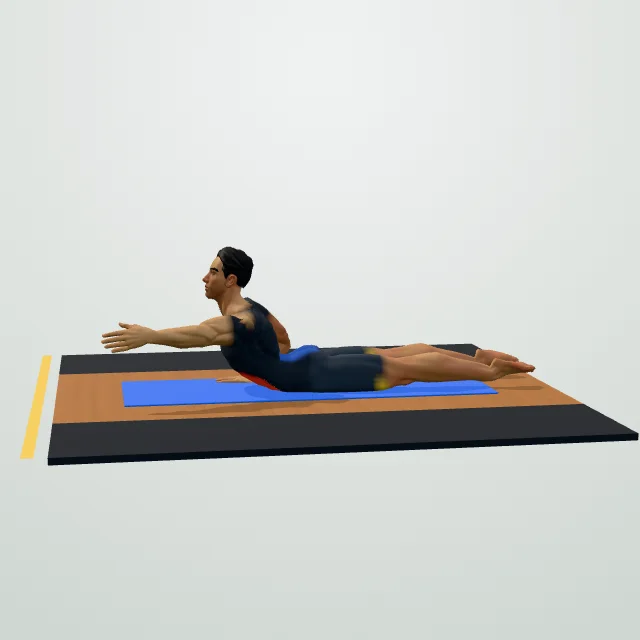
How to do it
- Lie face-down with hands under your shoulders.
- Extend your legs behind you, tops of feet down.
- Press your chest up, squeezing your lower back and glutes.
- Let your arms assist lightly rather than push hard.
- Keep your hips on the floor throughout.
- Hold, breathing steadily, at a comfortable arch.
- Lower back down slowly when finished.
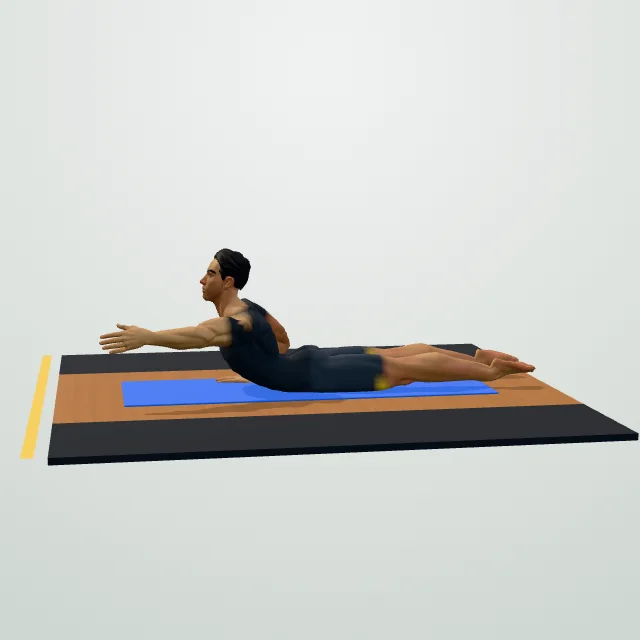
Coach cues
- Lift with your back, not your arms.
- Keep your hips down on the floor.
- Shoulders down, away from your ears.
- Breathe steady, rise only as far as comfortable.
Breathing: Breathe steadily throughout the hold; do not hold your breath or push into pain.
Common mistakes
Make it easier / Make it harder
The cobra stretch starts lying face-down and presses your chest up off the floor while your hips stay grounded, opening the front of your body from your abs up through your chest. It is a common finishing stretch after core or back training, and a familiar shape borrowed from yoga's cobra pose.
Muscles worked and why this stretch helps
This stretch lengthens the abs and hip flexors at the front of your body as your torso arches up and back, with the lower back doing the work of lifting your chest rather than being stretched itself. Sit-ups, planks, and other core exercises repeatedly shorten the abs through the same rounded range, so a backward arch like this gives them a rare stretch in the opposite direction.
Benefits
Arching gently backward can ease a tight, compressed feeling across the front of the abdomen after core training such as crunches or a plank, and it also stretches the hip flexors, which tend to shorten from long hours sitting. Many people also find the light backward extension simply feels good for the spine after a day spent in a rounded, forward posture.
Technique: lift with your back, not your arms
Lie face-down with your hands under your shoulders and your legs extended behind you, then press your chest up by squeezing your lower back and glutes, letting your arms only lightly assist rather than pushing hard through your hands. Keep your hips and the tops of your feet on the floor throughout, and rise only as high as feels comfortable in your lower back — a small lift with your back doing the work is more useful than a big shove from your arms. Keep your shoulders down away from your ears rather than hunching them up.
Dynamic vs. static: when to use the cobra stretch
The cobra stretch is a static stretch — a still hold rather than a moving one — best used after core or back training, once your muscles are already warm. Hold for 20–60 seconds, breathing steadily rather than pushing higher with each breath. Before training, a dynamic option like cat-cow moves the spine through flexion and extension without holding a static backward stretch right before your workout.
How to program it
Hold for 20–60 seconds and repeat two or three times, ideally as part of a post-workout stretching routine after ab or lower-back training. It flows naturally from a child's pose — moving from a rounded rest position into this gentle backward arch — for a simple spine-mobility sequence to finish a session.
Variations: baby cobra and sphinx
A "baby cobra," lifting only a few centimetres off the floor with your forearms staying down, is a gentler entry point for beginners or anyone with lower-back sensitivity. The sphinx stretch, propping up on your forearms instead of your hands, gives a similar but shallower stretch and is often more comfortable for a stiff lower back, since it needs less extension to reach the same position.
Safety notes
Rise slowly and stop at a comfortable arch rather than pushing into pain — a pinching or sharp sensation in the lower back means you have gone too far, not that you should push through it. Anyone with an existing lower-back injury, a herniated disc, or ongoing back pain should check with a doctor or physiotherapist before adding a backward-bending stretch like this one, since spinal extension can aggravate certain back conditions. Stop immediately if you feel sharp pain, tingling, or numbness down your legs rather than a general stretch, and warm up your spine first — see our guide to warming up for ideas.
Workout plans with this exercise
More exercises for mobility and stretching
Questions people ask
How long should you hold the cobra stretch?
What muscles does the cobra stretch work?
Should I do the cobra stretch before or after a workout?
Is the cobra stretch safe with back pain?
What is the difference between cobra stretch and sphinx stretch?
How do I make the cobra stretch easier?
Should my arms do the lifting in a cobra stretch?
General fitness information, not medical advice. Check with a doctor or physiotherapist before starting if you have a health condition, an injury or are pregnant. Stop if you feel chest pain, dizziness or sharp pain.