Abs and core · Home, no equipment
Hollow body hold: the gymnastics core position
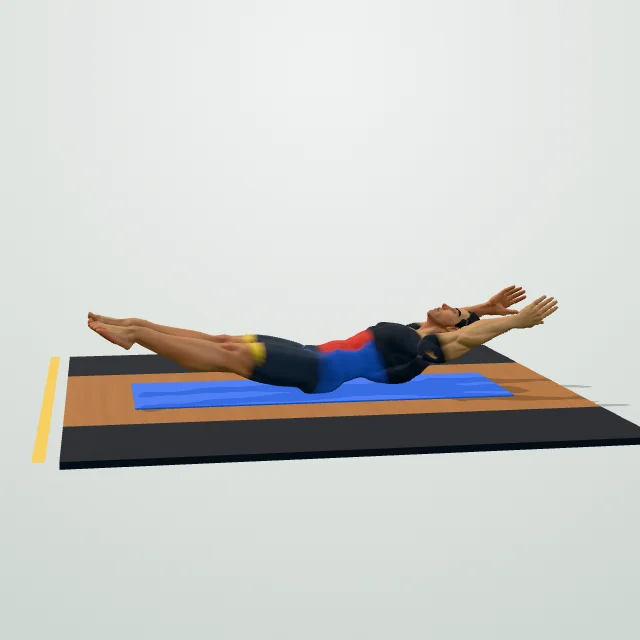
The hollow body hold curves your lower back into the floor while your arms and legs extend away from your body, building the whole-body tension gymnasts and calisthenics athletes rely on.
- Primary
- Abs
- Secondary
- Hip flexorsObliques
- Level
- Intermediate
- Type
- Compound · Both sides together
- Sets × reps
- 3 × 20 s hold
How to do it
- Lie on your back, arms and legs extended.
- Press your lower back flat into the floor.
- Brace your core.
- Lift shoulders and legs slightly off the floor.
- Hold the shallow curved shape.
- Breathe steadily throughout the hold.
Coach cues
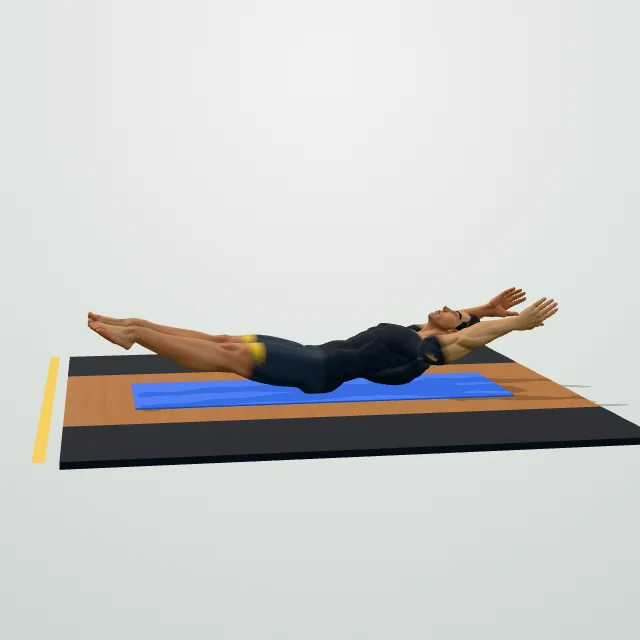
- Press your lower back flat.
- Extend arms and legs away from you.
- Pull your ribs down, not flared.
- Breathe steadily throughout.
Breathing: Breathe slowly and steadily throughout the hold; do not hold your breath.
Common mistakes
Make it easier / Make it harder
The hollow body hold is a gymnastics staple where you lie on your back, press your lower back flat into the floor, and extend your arms and legs away from your body while holding that shape. It builds the kind of full-body core tension used in handstands, tumbling, and calisthenics skills.
Muscles worked and the shape you are holding
Your abs do the main work of curling your ribs down and keeping your lower back pressed into the floor, while your hip flexors help hold your legs up and your lats and shoulders help keep your arms extended overhead without your back arching. The "hollow" in the name refers to the slightly curved, banana-like shape your body makes — the opposite of an arched or sagging position — and holding that shape under the pull of your extended limbs is what makes the exercise demanding.
Benefits
The hollow body position is the foundation for many gymnastics and calisthenics skills, including handstands, kips, and bar work, because it teaches your body to stay rigid and controlled instead of arching under load. It builds strong, coordinated core bracing that carries over to overhead lifts and any movement where your spine needs to resist extension. As with any ab exercise, it strengthens the core but will not spot-reduce fat from your stomach — visible abs depend on overall body fat from diet and total activity, not this one hold.
Technique in detail
Lie on your back, press your lower back flat into the floor, and brace your core. Extend your arms straight overhead and your legs straight out, lifting your shoulders and legs slightly off the floor so your body forms a shallow curve, with your lower back staying in contact with the ground the entire time. Keep your ribs pulled down rather than flared up, which is the most common way the position breaks down, and hold the shape while breathing steadily rather than holding your breath.
How to program it
3 sets of 15–20 seconds is a reasonable starting target, prioritizing a flat lower back over how long you can hold the position — a strict 15-second hold is worth more than a 40-second hold with an arched back. Once a basic hold feels manageable, add difficulty rather than only chasing duration, such as small controlled rocks or a wider arm and leg extension. Train it 2–3 times a week as part of a core routine, alongside the plank for a well-rounded bracing routine.
Variations and progressions
Bend your knees and keep your arms by your sides for an easier tucked version, which shortens the levers and reduces the demand significantly, then progress to one leg extended, then both legs extended, and finally both arms overhead as your strength builds. Once the static hold feels solid, add slow hollow body rocks, rolling gently forward and back while maintaining the shape, which is a common next step in gymnastics-style training.
Hollow body hold vs plank
The plank braces the core against gravity pulling your hips down while supported on your forearms and toes, while the hollow body hold braces the core against your own extended arms and legs pulling your spine into extension, from a lying position. Both train anti-extension core strength, but the hollow hold demands more from your hip flexors and shoulders and is a closer match for gymnastics and calisthenics goals.
Safety notes
The most common issue is the lower back lifting off the floor as fatigue sets in, which shifts strain onto the spine — if this happens, shorten the hold time or use the tucked, bent-knee version instead. Anyone with existing lower back pain, a hip flexor injury, or diastasis recti (abdominal separation) should check with a physiotherapist before adding this exercise. Do not hold your breath during the hold, which can spike blood pressure unnecessarily, particularly for anyone with high blood pressure or heart conditions.
Where it fits in a workout
The hollow body hold fits well at the end of a core session, in an abs workout, or as prep work before skill training on rings, bars, or a handstand. Anyone building toward calisthenics goals should treat it as a foundation to revisit often rather than a one-off exercise, building it into a wider routine with the plan builder.
More exercises for abs and core
Questions people ask
How do you do a hollow body hold correctly?
What muscles does the hollow body hold work?
How long should you hold a hollow body hold?
Is the hollow body hold harder than a plank?
How do you make the hollow body hold easier?
Why does my back arch during the hold?
Is the hollow body hold good for gymnastics training?
General fitness information, not medical advice. Check with a doctor or physiotherapist before starting if you have a health condition, an injury or are pregnant. Stop if you feel chest pain, dizziness or sharp pain.