Mobility and stretching · Home, no equipment
Cross-body shoulder stretch: pull from the elbow, not the wrist
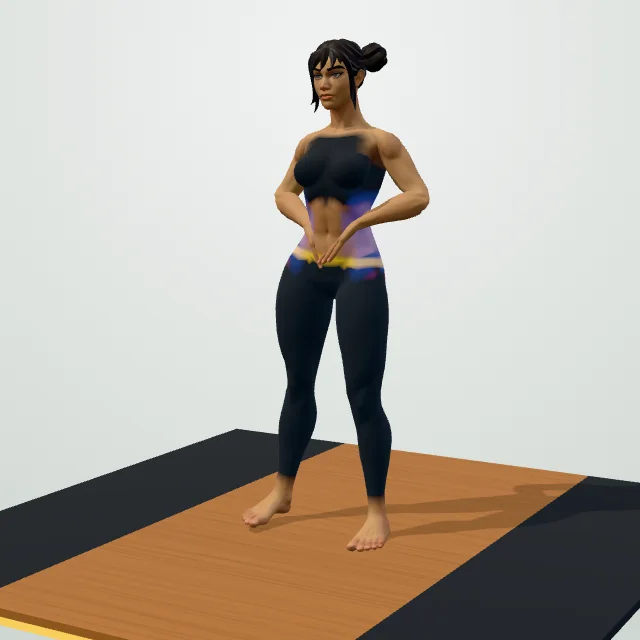
Drawing one straight arm across your chest and holding it with the other elbow is the simplest way to stretch the back of a tight shoulder, as long as the pull comes from the upper arm rather than a yank on the hand.
- Primary
- Rear delts
- Secondary
- Upper back
- Level
- Beginner
- Type
- Isolation · One side, then the other
- Sets × reps
- 1 × 25 s hold per side
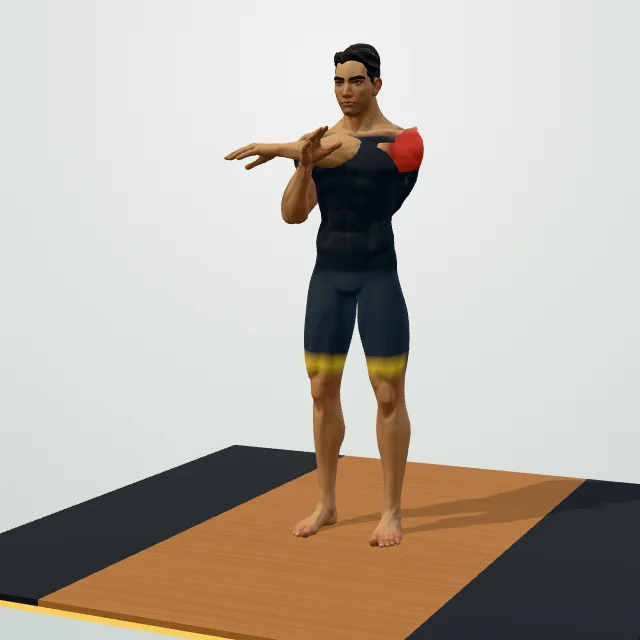
How to do it
- Bring one straight arm across your chest at shoulder height.
- Use your other forearm to gently press it closer to your body.
- Hold above the elbow, not the wrist.
- Keep both shoulders level and relaxed.
- Stop once you feel a stretch across the back of the shoulder.
- Hold, breathing steadily, then release.
- Switch arms and repeat.
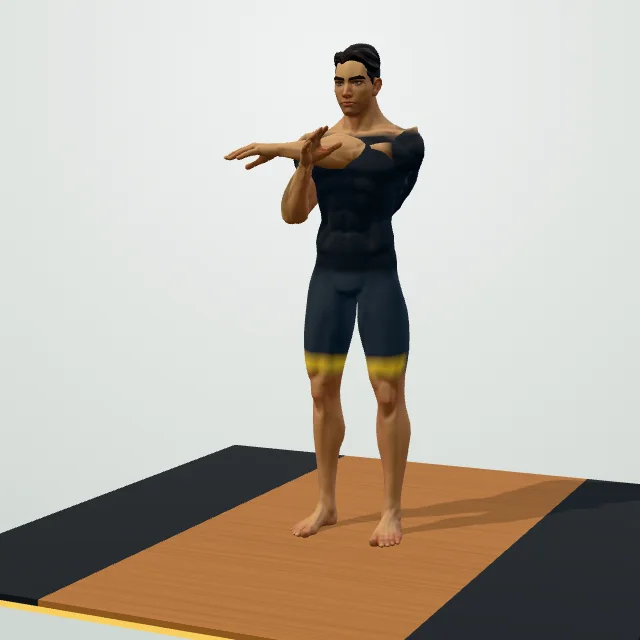
Coach cues
- Hold above the elbow, not the wrist.
- Keep both shoulders level, no shrugging.
- Press gently, do not force it.
- Breathe steady throughout the hold.
Breathing: Breathe steadily throughout the hold; do not hold your breath or yank the arm in.
Common mistakes
Make it easier / Make it harder
The cross-body shoulder stretch draws one straight arm across your chest to lengthen the muscles at the back of the shoulder, held or gently pulled with the other arm. It is one of the quickest stretches you can do anywhere, and it targets a part of the shoulder — the rear — that most warm-ups and workouts otherwise leave alone.
Muscles worked and why the rear shoulder gets tight
This stretch mainly lengthens the rear deltoid, the back portion of the shoulder muscle, with the upper back muscles between the shoulder blades sharing part of the stretch. The rear shoulder tends to tighten from long hours with rounded, forward shoulders at a desk or a phone, and from pressing-heavy training that works the front of the shoulder far more than the back.
Benefits
A looser rear shoulder can make it easier to reach across your body, rotate your arm through a fuller range, and feel less of that tight, achy sensation after a shoulder or back session. Combined with strengthening work for the rear shoulder, such as face pulls or a rear delt fly, stretching helps keep the whole shoulder moving comfortably rather than getting stiffer over time.
Technique: pull from the upper arm, not the wrist
Bring one straight arm across your chest at roughly shoulder height, then use your other forearm or hand to gently press it closer to your body — hold above the elbow rather than gripping the wrist, since pulling from the wrist can twist the joint instead of stretching the shoulder. Keep both shoulders level and relaxed, without shrugging the working shoulder up toward your ear. You should feel the stretch across the back of the shoulder, not a sharp pull inside the joint itself.
Dynamic vs. static: when to stretch your shoulders
This is a static stretch — a still hold rather than a moving one — best used after training or any time your shoulders feel tight, once the joint is already warm. Hold for 20–60 seconds per side, breathing steadily instead of forcing the arm closer with each breath. Before a workout, a dynamic option like arm circles moves the shoulder through its range without the temporary strength dip a long static hold can cause right before pressing or pulling.
How to program it
Hold each side for 20–60 seconds and repeat once or twice if one shoulder feels tighter than the other, and it fits naturally into a post-workout stretching routine after upper-body training. It also works well on its own during the day, especially after long periods sitting at a desk, since it needs no equipment and takes only a minute.
Variations: seated, with a strap, or lying down
A seated version gives the same stretch with a stable base if standing feels awkward, and looping a strap or towel around the crossing arm lets you add a light, controlled pull without gripping the elbow directly. Lying on your back with the crossing arm supported by the floor is a gentler option for anyone easing back into shoulder mobility work after an injury.
Safety notes
Press the arm across gently and stop at a comfortable pull rather than forcing it — the shoulder is a mobile, less stable joint, and forcing this stretch can aggravate rather than relieve tightness. Anyone with a rotator cuff injury, shoulder impingement, or recent shoulder surgery should check with a doctor or physiotherapist before adding this stretch, since crossing the arm can load an already irritated shoulder. Stop if you feel sharp pain, pinching, or numbness rather than a general stretch, and warm the shoulder up first — see our guide to warming up for a few simple options.
Workout plans with this exercise
More exercises for mobility and stretching
Questions people ask
How long should you hold a shoulder stretch?
What muscles does the cross-body shoulder stretch work?
Should I stretch my shoulders before or after a workout?
Why does the back of my shoulder feel tight?
Is the cross-body shoulder stretch safe with a rotator cuff injury?
Should I hold the elbow or the wrist during this stretch?
What is a good alternative to the cross-body shoulder stretch?
General fitness information, not medical advice. Check with a doctor or physiotherapist before starting if you have a health condition, an injury or are pregnant. Stop if you feel chest pain, dizziness or sharp pain.