Abs and core · Home or gym
Hanging leg raise: core and grip strength from a bar
The hanging leg raise lifts your legs while you hang from a bar, removing any floor support and forcing your abs, hip flexors, and grip to control the whole movement at once.
- Primary
- AbsHip flexors
- Level
- Advanced
- Type
- Isolation · Both sides together
- Sets × reps
- 3 × 8-12 reps
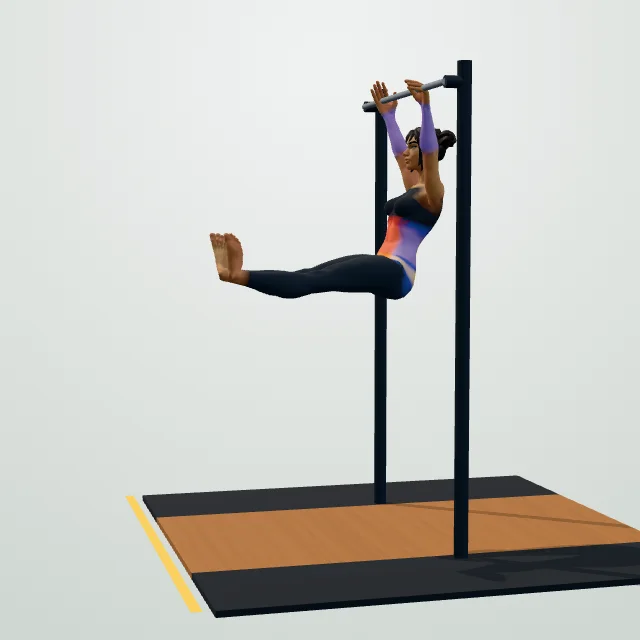
How to do it
- Hang from the bar, arms fully extended.
- Grip slightly wider than shoulder-width.
- Brace your core, shoulders pulled down.
- Lift your straight legs up without swinging.
- Pause briefly at the top.
- Lower your legs back down slowly.
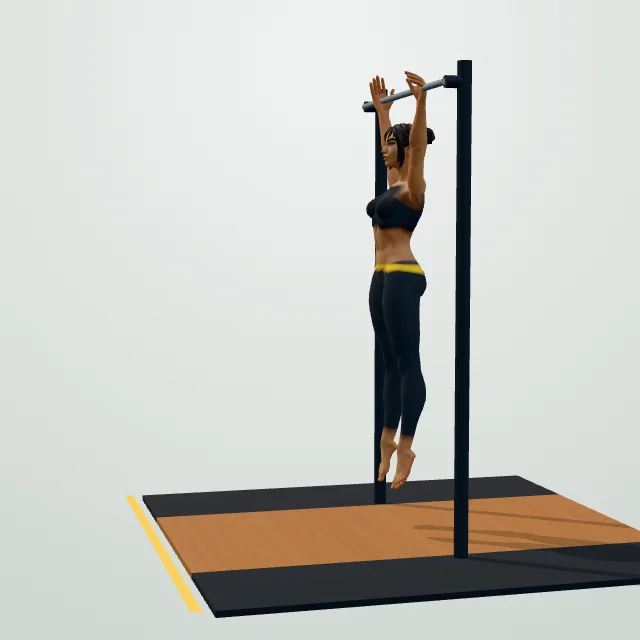
Coach cues
- Hang tall, shoulders down.
- Brace before you lift.
- Raise legs without swinging.
- Lower down slow and controlled.
Breathing: Breathe out as you lift your legs, breathe in as you lower them.
Common mistakes
Make it easier / Make it harder
Sets and reps by goal
| Goal | sets | reps | Rest |
|---|---|---|---|
| Strength | 3–5 | 6–8 | 90–120 s |
| Muscle growth | 3–4 | 10–15 | 60–90 s |
| Endurance | 2–3 | 15–20 | 30–60 s |
The hanging leg raise has you hang from a pull-up bar and lift your straight legs up toward your chest or higher, using your abs and hip flexors to control the movement while your forearms and grip hold your whole bodyweight. It is one of the more demanding ab exercises because nothing supports your torso or legs except your own core.
Muscles worked and why hanging changes everything
Your abs and hip flexors do the same job as in a lying leg raise, curling your pelvis and lifting your legs, but with no floor beneath you, your abs also have to stop your body from swinging and your lower back from arching under its own hanging weight. Your forearms and grip get heavily loaded just to hold on, which is why grip endurance is often the first limit beginners hit, before their abs are even fully fatigued.
Benefits
Hanging leg raises build serious core strength and control, along with grip and shoulder stability that carries over to pull-ups, climbing, and gymnastics-style movement. They are a natural stepping stone toward the toes-to-bar seen in CrossFit and calisthenics training. As with any ab exercise, they strengthen the core but will not spot-reduce fat from your stomach — visible abs depend on overall body fat from diet and total activity, not this one exercise.
Technique in detail
Hang from a pull-up bar with an overhand grip slightly wider than shoulder-width, arms fully extended and shoulders pulled down away from your ears rather than shrugged up. Brace your core and, without swinging your body, lift your straight (or slightly bent) legs up in front of you, aiming for at least hip height and toward parallel with the floor or higher as you progress. Lower your legs back down slowly under control rather than letting them drop, which is what causes the swinging that makes later reps harder to control.
How to program it
3 sets of 8–12 controlled reps is a good target once you can do the movement without swinging; if your grip fails before your abs do, use lifting straps so you can still train the core fully. Because it demands strength most beginners don't yet have, start with the easier variations below and build up rather than fighting through poor form. Train it 2–3 times a week alongside pulling work such as the pull-up or as the finisher of a core session.
Progression: from beginner to toes-to-bar
Start with the hanging knee raise, bending your knees to shorten the lever and make the exercise far more manageable, then progress to bent-knee raises with a bigger range, then straight-leg raises to hip height, and finally straight-leg raises to the bar (toes-to-bar). Each step should feel controlled and swing-free before you move to the next. If you cannot yet hang comfortably, build up hang time first with a dead hang.
Hanging leg raise vs lying leg raise
The lying leg raise is done flat on the floor, which supports your torso and removes the grip demand, making it a much more beginner-friendly option. The hanging version removes that support entirely, adding grip, shoulder stability, and anti-swing core control on top of the same hip-flexor and ab work — a clear step up once the lying version feels easy.
Safety notes
Avoid using momentum or swinging to throw your legs up, which shifts strain from your abs to your shoulders and lower back and increases injury risk. Anyone with a shoulder injury, existing lower back pain, or a grip or elbow issue should build strength on the lying leg raise or knee raise first and check with a physiotherapist before hanging work. Stop for sharp shoulder or back pain — a strong ab and grip burn is expected, joint pain is not.
Where it fits in a workout
Because hanging leg raises tax the grip as well as the core, they work best placed before heavy pulling work like rows or pull-ups, or at the very end of a session once your grip has nothing else left to hold. They fit naturally into an abs workout or a calisthenics-style session built around a pull-up bar, and the plan builder can slot them into a wider routine alongside your other core and pulling exercises.
More exercises for abs and core
Questions people ask
How do you do a hanging leg raise correctly?
What muscles does the hanging leg raise work?
How do I progress to a hanging leg raise?
Why do my legs swing during hanging leg raises?
Is the hanging leg raise better than the lying leg raise?
What if my grip gives out before my abs?
Are hanging leg raises safe for shoulder problems?
General fitness information, not medical advice. Check with a doctor or physiotherapist before starting if you have a health condition, an injury or are pregnant. Stop if you feel chest pain, dizziness or sharp pain.